
Lyophilization Service for Molecular Diagnostics
Custom lyophilization development for PCR, qPCR, RT-qPCR and isothermal reagents: formulation assessment, cycle development, assay-ready formats, pilot evaluation, packaging and scale-up, built around your assay, instrument, reaction volume and quality requirements.
Feasibility assessment is free of charge · No minimum order quantity

Three claims, each backed by data on this page
Every number below links to the study it comes from. No cold chain, no waiting list, no guesswork about shelf life.
Ships at room temperature
Beads left open 4 hours at 20–25% RH, sealed, then held 30 days at 55 °C: amplification stayed consistent with the liquid control in all six channels.
See the shipping stress data →Real-time stability, not extrapolation
Two lyo-ready master mixes stored 18 months at room temperature: every channel within ΔCt ≤ 1 and ΔRn within 10% of the same-batch liquid control.
See the 18-month data →Ready to use, in your container
Beads, 8-tube strips, 96-well plates, pre-filled tubes, vials and custom consumables, validated in the final container. No minimum order.
See formats and scale →What we lyophilize, and how it is delivered
Any glycerol-free molecular reagent can be dried in the format your kit needs.
Six ways to deliver your dry reagent
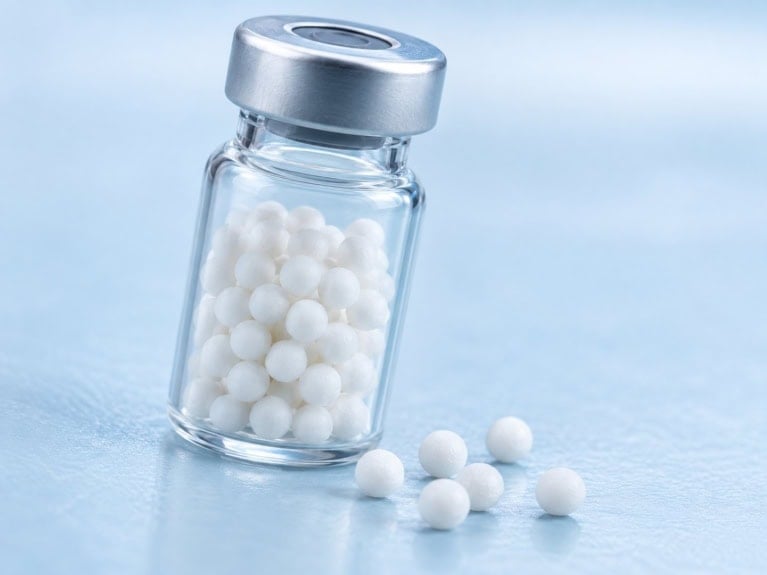
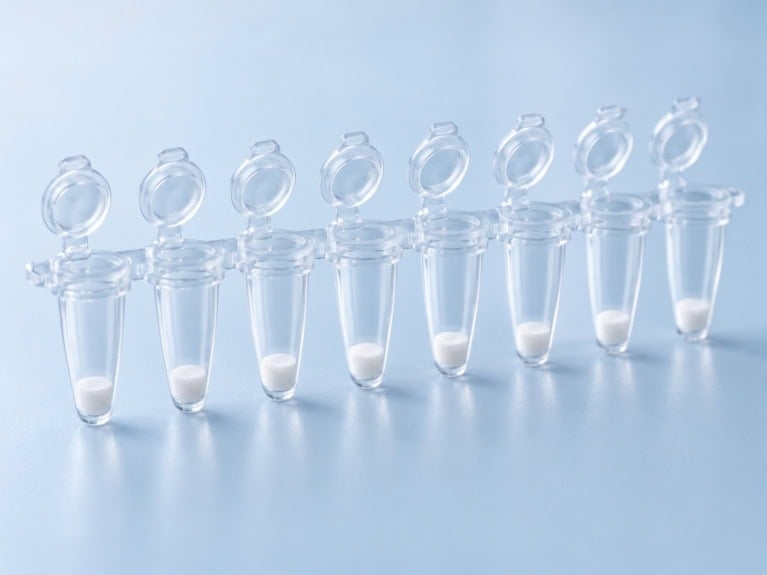
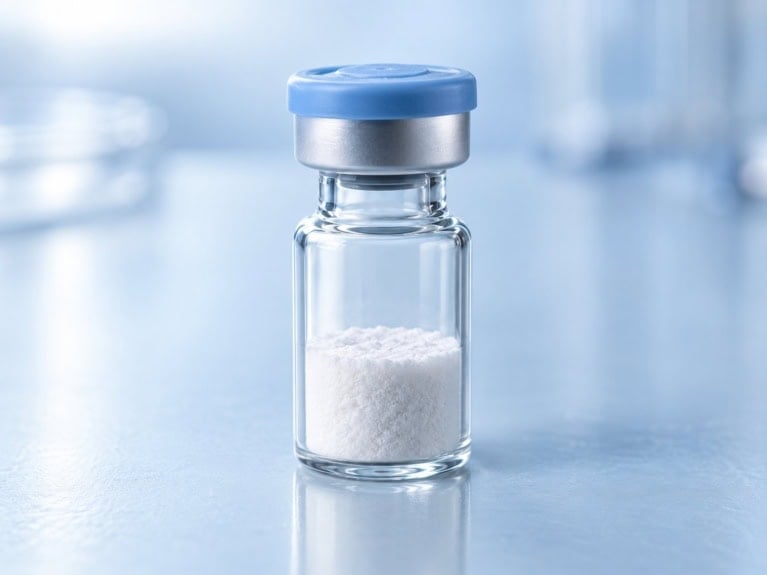
Every format is validated in its final container during cycle development, so the pilot lot you approve is made the same way as production.
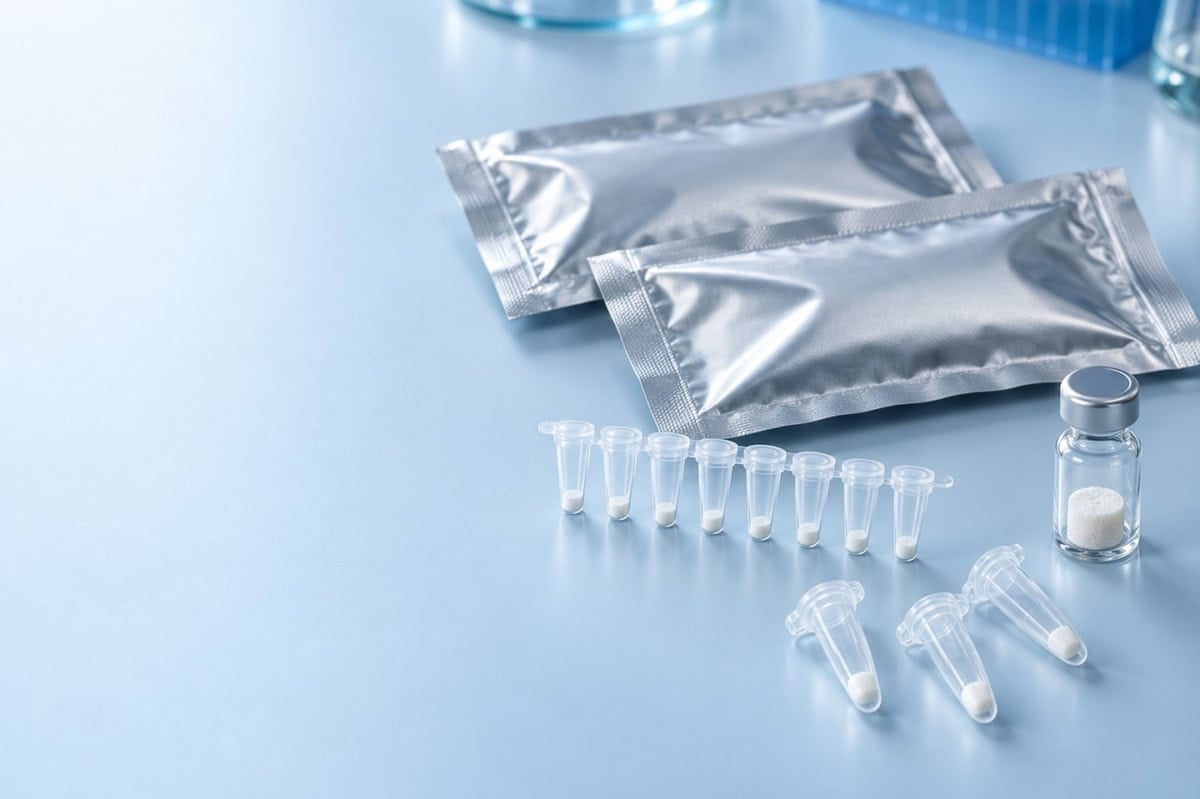
Any batch size, no waiting list
Our freeze-dryers run continuously for many customers at once, so pilot lots and small orders are scheduled alongside other runs instead of waiting for a dedicated batch.
Same process at every scale. Pilot lots get the same cycle validation, release testing and documentation as full production runs.
Your lyophilization project, step by step
What you provide and what you receive at each step, from assay brief to locked production process.
For a free feasibility assessment, share:
- Intended use & target panel
- Sample type, instrument & reaction volume
- Current liquid formulation or component list
- Target format (beads, strips, plates) & expected volume
Brief & acceptance criteria

IVD Project Intake
You share the intended use, target panel, sample type, instrument, reaction volume, required format and expected volume. We return a scoped proposal with a feasibility plan.
You provide assay briefYou receive scoped proposal

Component Definition
Every component of the reaction is listed with its storage buffer and lyophilization compatibility. Glycerol-containing enzymes and other non-volatile stabilizers are flagged for substitution with glycerol-free equivalents.
You receive component compatibility table

QC Criteria Definition & Alignment
Before drying, both sides agree on what “equivalent to liquid” means: Ct difference, limit of detection, NTC behaviour and reconstitution time. These criteria become the release specification for the finished product.
You receive signed acceptance criteria
Formulation, drying & pilot QC

Assay & Formulation Integration
The lyoprotectant system is matched to your assay so that active components keep their structure through dehydration, and the buffer is adjusted to rehydrate at your protocol’s final concentrations. The reformulated liquid mix is tested against your original mix before drying.
You receive lyo-ready liquid mix + wet data

Lyophilization Development
The freeze-drying cycle is built by tuning pre-freezing, primary drying and secondary drying, and validated in the final container type. Pilot beads or cakes are compared with the liquid baseline.
Typical 4–8 weeksYou receive pilot beads or cakes

Internal QC & Stability Testing
Pilot material is released against the criteria agreed in step 3 on the four release tests described below. Accelerated stability starts in parallel and real-time stability continues to support your shelf-life claim.
You receive pilot COA + stability summary
Validation & production

Customer Validation & Scale-Up / Mass Production
After your validation, the process is scaled up with simulated and real material runs until performance and stability are reproducible, then locked for production in the controlled area described below.
You receive locked production process
Lyophilized Reagent Stability: 18 Months at Room Temperature
Real-time data on two lyo-ready master mixes: the same batch was run as a freshly prepared liquid mix (control) and as lyophilized reagent sealed in a foil pouch under vacuum and stored at room temperature for 18 months. Acceptance criteria were ΔCt ≤ 1 and ΔRn within 10% of the control at every template level. Click a chart to enlarge.
FM2181-4 · human genomic DNA, four channels

| Template | FAM | VIC | ROX | CY5 |
|---|---|---|---|---|
| 2.5 pg/µL | 32.04 → 31.48 (−0.56) | 32.63 → 31.88 (−0.75) | 34.78 → 34.69 (−0.09) | 31.45 → 32.06 (+0.61) |
| 25 pg/µL | 28.16 → 28.29 (+0.13) | 28.88 → 28.91 (+0.03) | 31.24 → 31.27 (+0.03) | 28.19 → 28.27 (+0.08) |
| 250 pg/µL | 24.93 → 24.84 (−0.09) | 25.30 → 25.30 (+0.00) | 27.40 → 27.63 (+0.23) | 24.77 → 24.80 (+0.03) |
All four channels stayed within ΔCt ≤ 1 and ΔRn within 10% of the same-batch liquid control after 18 months at room temperature.
Ct shown as liquid → lyophilized (ΔCt). Program: 50 °C 2 min; 95 °C 5 min; 50 cycles of 95 °C 10 s / 55 °C 40 s.
FM5144 · respiratory RNA panel, three targets + internal control

| Template | FAM | ROX | CY5 |
|---|---|---|---|
| 2.35 copies/µL | 28.26 → 27.98 (−0.28) | 26.27 → 26.48 (+0.21) | 30.35 → 29.89 (−0.46) |
| 23.5 copies/µL | 25.35 → 25.47 (+0.12) | 22.46 → 22.45 (−0.01) | 26.60 → 26.25 (−0.35) |
| 235 copies/µL | 22.56 → 22.66 (+0.10) | 19.06 → 19.28 (+0.22) | 23.22 → 23.09 (−0.13) |
All three target channels stayed within ΔCt ≤ 1 and ΔRn within 10% of the same-batch liquid control after 18 months at room temperature. The VIC internal control (fixed input) read 22.02 → 20.57 Ct.
Ct shown as liquid → lyophilized (ΔCt). Program: 50 °C 15 min; 95 °C 1 min; 50 cycles of 95 °C 15 s / 56 °C 45 s.
Accelerated stability across formats
The same lyophilized formulations were also stressed at elevated temperature in the three formats BIORI produces: 8-tube strips, glass vials and lyophilized beads.
| System | Format | Accelerated storage | Result |
|---|---|---|---|
| HBV duplex qPCR (DNA) | 8-tube strip, in situ | 37 °C, 150 days · 45 °C, 60 days | Amplification curves overlap the same-batch liquid control; cake appearance unchanged |
| Human genomic 4-plex qPCR (DNA) | 8-tube strip, in situ | 37 °C, 150 days · 45 °C, 90 days | Same |
| Human total RNA 3-plex RT-qPCR | 8-tube strip, in situ | 37 °C, 150 days | Same |
| Human total RNA 3-plex RT-qPCR | Glass vial, in situ | 55 °C, 14 days | Same |
| Human total RNA 3-plex RT-qPCR | Lyophilized bead | 45 °C, 14 days | Same |
| DNA LAMP (λ DNA) | 8-tube strip, in situ | 55 °C, 30 days | Same |
| RT-LAMP (human total RNA) | 8-tube strip, in situ | 55 °C, 12 days | Same |
Accelerated data indicate tolerance to temperature excursions during shipping and handling; labelled shelf life for any product is set from real-time studies only.
Shipping Stress Data for Room-Temperature Transport
Heat and humidity are the two stresses a parcel meets in transit. This study applied both to beads made with our anti-hygroscopic lyoprotectant and then ran them against freshly prepared liquid mix.

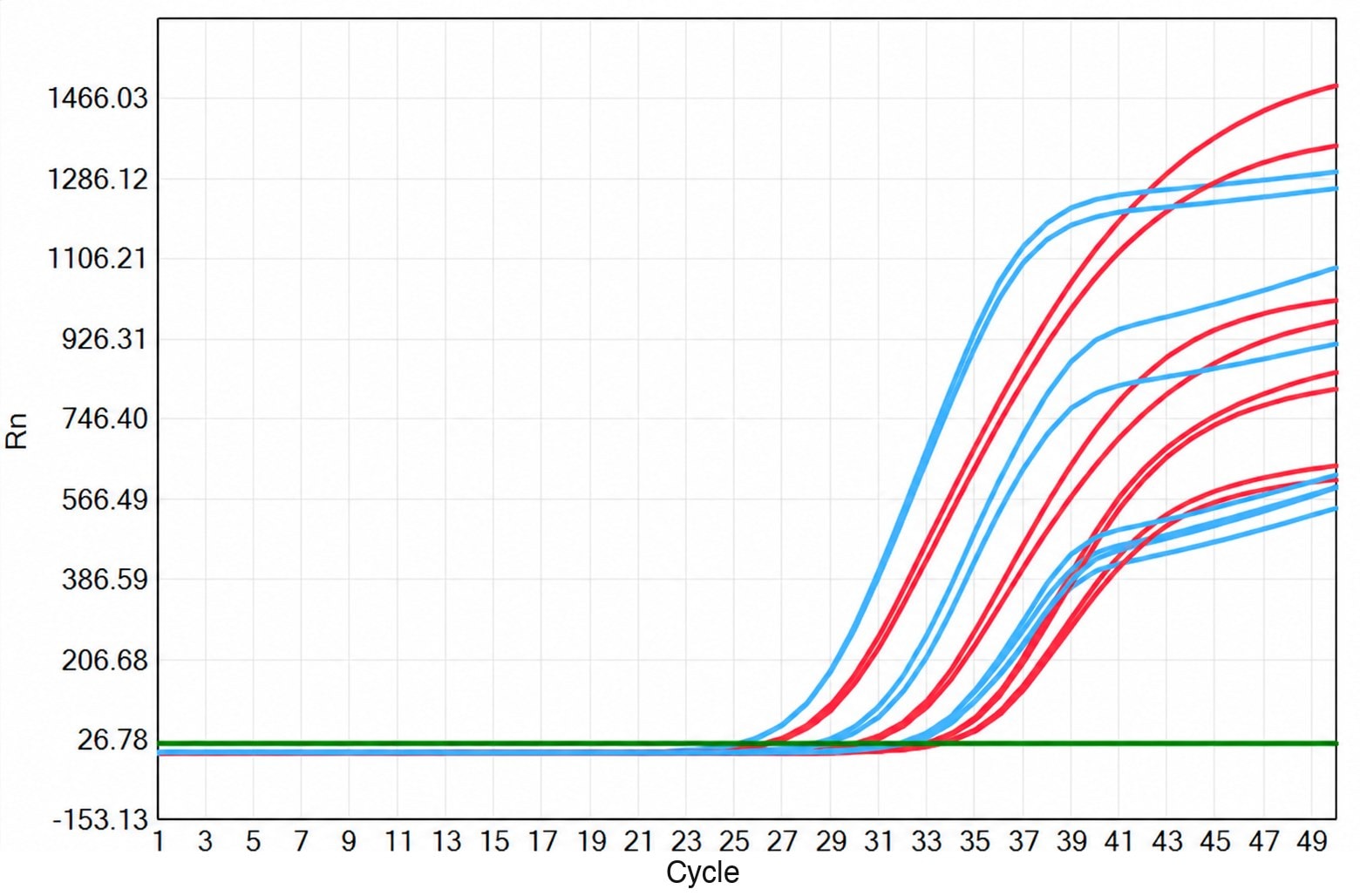
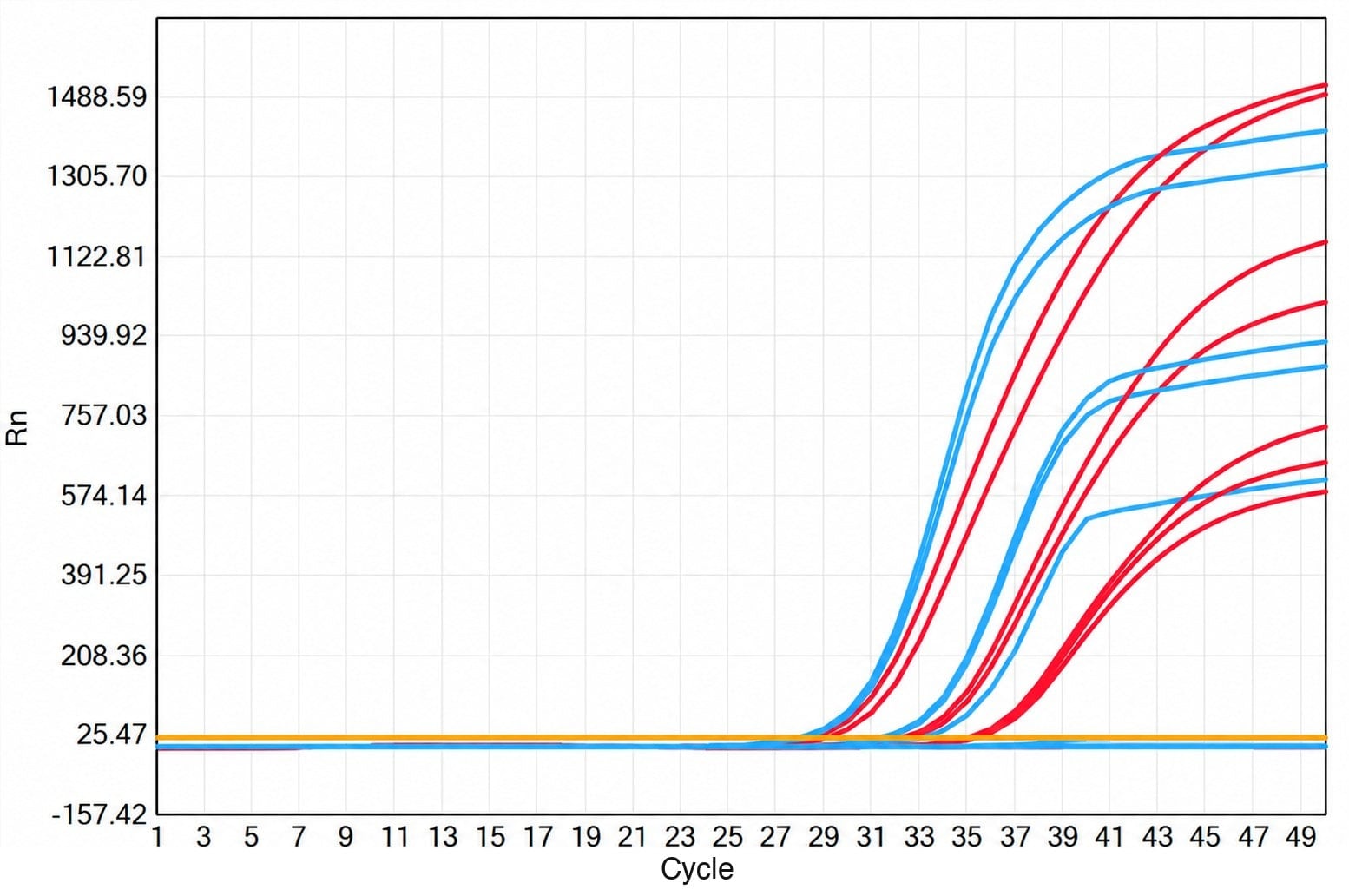
Blue: freshly prepared liquid control. Red: lyophilized beads left open for 4 h at 25 °C and 20–25% RH, vacuum-sealed in foil, then held at 55 °C for 30 days. Human genomic DNA 4-plex qPCR (FAM, VIC, ROX, CY5) and HBV qPCR (FAM, VIC). Click to enlarge.
Open for 4 hours, then 30 days at 55 °C: performance still matches the liquid control
- Filling exposure. Beads left open for 4 h at 25 °C and 20–25% RH before capping.
- Packaging. Vacuum-sealed in aluminium foil pouches.
- Heat stress. 55 °C for 30 days.
- Readout. Six fluorescence channels across two assays versus liquid control.
Result: after the open-lid exposure and 30 days at 55 °C, amplification stayed consistent with the liquid control in all six channels, and bead appearance was unchanged.
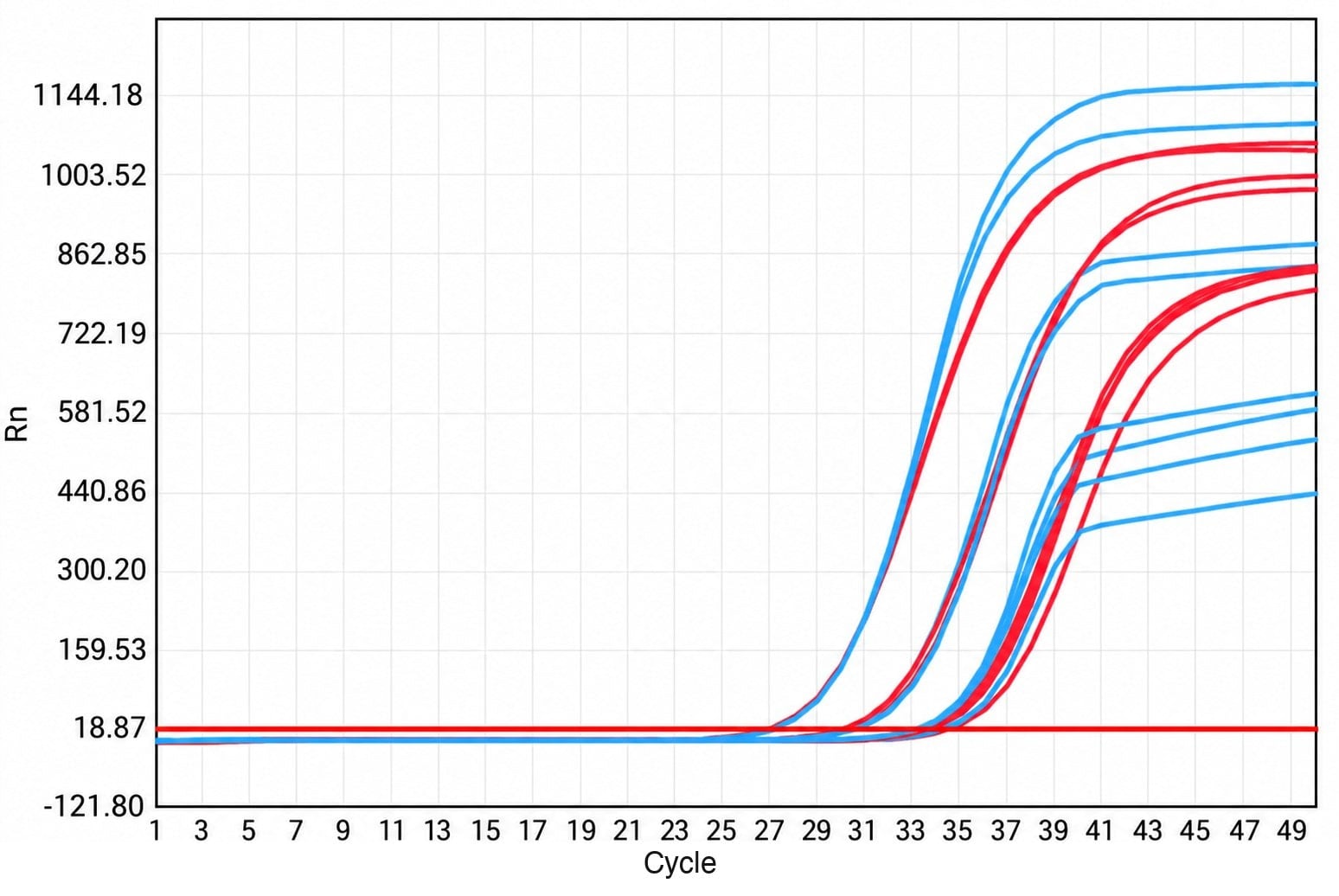
3-plex RT-qPCR after 4 h open and 28 days at 55 °C
Human total RNA at 0.464, 4.64 and 46.4 pg/µL. Each panel is one fluorescence channel; the three curve groups are the three template levels.
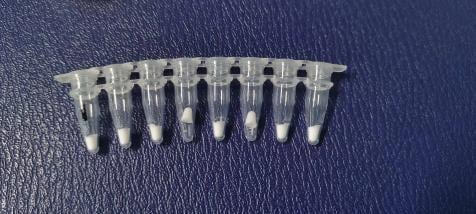
14 days at 55 °C: beads intact, no shrinkage
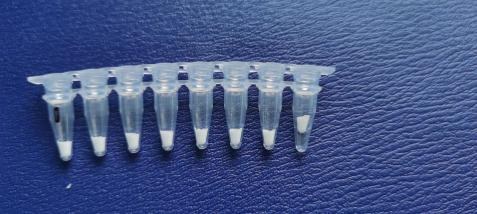
Foil-sealed beads from a 4-plex human genomic DNA qPCR assay after 14 days at 55 °C. All rows amplified at 2.5, 25 and 250 pg/µL template. Rows show uncolored beads and three color-coded variants from the same study.

The same result was obtained for the FM5144 4-plex RT-qPCR assay under identical conditions. Click the photo to enlarge.
Quality system, production environment and release testing
The three things a supplier audit asks for first: who certifies us, where and how the product is made, and what every lot is tested on before it ships.
13485
ISO 13485:2016 certified quality system
EN ISO 13485:2016 · certified by SGS United Kingdom Ltd
Documentation with every lot
Lot-specific COA, SDS and TDS with storage and shipping guidance. Lot traceability information and key QC records on request. Quality-system statements and supporting compliance files tailored to your market and regulatory pathway.
GMP-aligned cleanroom production with batch-to-batch control.
Liquid-nitrogen bead forming in a Class 100,000 cleanroom
Where and how every lyophilized lot is made, from bead forming to vacuum-sealed pouch.
Every lyophilized lot is released on four tests
Frequently Asked Questions
Scope, costs and what to send us.
What information is needed to start a BIORI OEM lyophilization project?
To start a BIORI OEM lyophilization project efficiently, please share:
-
Product concept & intended use (application, target market, RUO/IVD, performance goals)
-
Required format (liquid/lyophilized, singleplex/multiplex, packaging and label requirements)
-
Technical details (target list/sequence if applicable, sample type, workflow and instrument/platform compatibility)
-
Quality & compliance expectations (ISO requirements, QC items, acceptance criteria, documents needed such as COA/SDS)
-
Demand & timeline (estimated annual volume, pilot quantity, desired milestones, delivery terms)
-
Reference materials (existing formulation/specs, competitor benchmark, any available validation data)
Explore BIORI’s Molecular Diagnostics solutions and OEM Service capabilities.
Can BIORI lyophilize my existing liquid formulation, and are the lyoprotectants sold separately?
Yes on both counts. Your formulation can be lyophilized as supplied. The feasibility assessment checks it for components that hinder drying, such as glycerol, and recommends a lyo-compatible substitute where needed; we then optimize the lyoprotectants, buffer system and drying cycle, and verify post-lyo performance against your liquid baseline (sensitivity, specificity, repeatability) with recommended storage and shipping conditions.
The lyoprotectants used in our service are BIORI proprietary formulations and are also available as stand-alone products for in-house development: AcuGenix Lyophilization Protectant-17 (AS212-17) for DNA systems and AcuGenix Lyophilization Protectant-156-5 (AS212-156-5) for RNA systems. Both allow the dried product to stay open for 4 hours at 20–25% RH before vacuum packing.
Which parts of a lyophilization project are free of charge?
Free of charge: the feasibility assessment of your formulation and project, covering compatibility, excipient review, key risks and the recommended format.
Quoted per project: primer and probe verification in the lyo-ready system, cycle optimization, and evaluation or pilot lots. BIORI does not supply free lyophilized samples; evaluation quantities are included in the project quotation. There is no minimum order for production runs.
What is the typical lead time for samples and prototypes?
BIORI lead times depend on project complexity and material availability. As a general reference:
-
In-stock evaluation samples: typically 5–10 business days after confirming requirements
-
Customized prototype (lab scale): typically 2–4 weeks
-
Lyophilized prototype with cycle optimization: typically 4–8 weeks
We will confirm a specific timeline after reviewing your requirements, target list, and validation scope.
What documentation and compliance materials does BIORI provide?
BIORI provides a documentation package aligned with regulated workflows, which may include:
-
COA (lot-specific Certificate of Analysis)
-
SDS (Safety Data Sheet)
-
TDS / Product Specification and storage/shipping guidance
-
Lot traceability information and key QC records (upon request)
-
Quality system statements (e.g., ISO-managed QMS) and supporting compliance files as applicable
The exact document set can be tailored based on your market, regulatory pathway, and internal QA requirements.
Learn more about BIORI’s Manufacturing & Quality systems.
Ready to Start Your Lyophilization Project?
Send your assay brief. The feasibility assessment is free of charge and there is no minimum order.