

Custom assay & kit development
HCD & HCP Custom Assay Development
Custom qPCR assays for residual host cell DNA and ELISA kits for host cell proteins, developed around your expression system, sample matrix and testing goals.
- HCD · qPCR
- Residual host cell DNA
- HCP · ELISA
- Host cell protein assays
- Sample matrix
- Compatibility and interference
- ISO 13485 QMS
- SGS-certified · view certificate
Service scope
Residual host cell DNA by qPCR, host cell protein by ELISA
Select the development track for the impurity you need to measure. HCD and HCP projects are defined around the relevant host, process and analytical objective.
Residual host cell DNA
Develop a qPCR assay for residual host cell DNA in your expression system and sample matrix.
- Residual DNA quantificationqPCR-based detection of host-derived DNA.
- Background & control strategyLow-background design and no-template controls.
- Matrix compatibilityInhibition assessment within the intended sample matrix.
Host cell protein
Develop an HCP ELISA kit for your host or process, including an appropriate antibody strategy and coverage evaluation support.
- Host / process specificityDevelopment around the relevant host-cell protein population.
- Antibody strategyPolyclonal or monoclonal antibodies.
- Coverage evaluationEvaluation of antibody coverage against the host cell protein population.
Development scope, materials and verification requirements are agreed for each project.
Designed for bioproduction workflows
Host systems, sample types and testing goals
The host, the sample's process stage and the intended use together define the assay-development work.
- Host systems
- CHO · HEK293 · E. coli · Yeast
- Samples
- Clarified harvest
- Protein A eluate
- Process intermediates
- Drug substance
- Testing goals
- Process monitoring · Release testing · Comparability · Technical transfer

Development pathways
From the project brief to a custom kit
Explore the activities included in each development track. The project plan defines the materials, evaluation work and supply requirements.
Bring these details to the first discussion
- HCD, HCP or both
- Host system and process stage
- Sample matrix and intended use
- Existing method and project goals
- 01
Define targets & requirements
Establish the host system, sample context and analytical objective.
- Requirement analysisDefine the intended use, host system and sample matrix.
- Literature & regulatory reviewReview published methods and the regulatory guidance for the assay.
- Sequence conservation & specificityAssess the target region for the intended host system.
- 02
Develop & verify the assay
Build the qPCR system and evaluate its performance.
- Primer/probe design & synthesisDevelop the target-specific detection reagents.
- Reference-standard preparationPrepare the standard used for assay development.
- Optimization & performance verificationEvaluate assay conditions, background and matrix compatibility.
- 03
Plan stability & delivery
Stability study and delivery of the developed kit.
- Stability study & deliveryStability testing and delivery as defined in the project plan.
- 01
Prepare antigens & antibodies
Develop the biological materials for the HCP assay.
- Antigen preparationPrepare antigen material relevant to the host or process.
- Animal immunizationInclude immunization within the selected antibody-development strategy.
- Antibody generationGenerate the antibodies used for kit development.
- 02
Develop & evaluate the kit
Bring the antibody reagents into the ELISA system.
- ELISA kit developmentDevelop the assay configuration around project requirements.
- Kit verification / validationEvaluate the agreed performance characteristics.
- Coverage evaluationInclude coverage assessment in the kit evaluation plan.
- 03
Manufacture the kit
Prepare the agreed kit configuration for supply.
- Kit manufacturingManufacture the developed kit under the agreed quality and supply requirements.
Activities are grouped here for clarity. The detailed sequence, coverage work and verification criteria are defined in the agreed project plan.
Validation & quality assurance
Evaluate performance in the intended application
Define the validation characteristics and acceptance criteria before interpreting the assay's performance in your samples.
| Characteristic | Evaluation focus |
|---|---|
| Sensitivity | Limit of detection (LOD)Determine the limit of detection the application requires. |
| Precision | Within and between assaysEvaluate repeatability and between-assay variability. |
| Specificity & interference | Target and interference responseCheck the response to the target and to interfering substances. |
| Linearity & range | Working measurement rangeEvaluate response over the agreed analytical range. |
| Recovery & matrix effects | Representative process samplesAssess recovery and the influence of the sample matrix. |
| Suitability & stability | Controls and stabilitySystem-suitability controls and stability checks. |
Validation planning follows ICH Q2 principles. The characteristics, study design and acceptance criteria depend on the intended use and agreed project scope.
Project deliverables
What you receive at the end of a project
Agree the kit configuration, supporting documents and supply arrangements within the project scope.
Custom kit configuration
An HCD qPCR or HCP ELISA kit developed for the agreed host, matrix and analytical objective.
Supporting documentation
COA, MSDS and IFU materials included in the agreed documentation package.
Quality & traceability
QA/QC review and batch traceability for each kit lot.
Ongoing supply planning
Manufacturing and long-term supply of the kit for routine use.
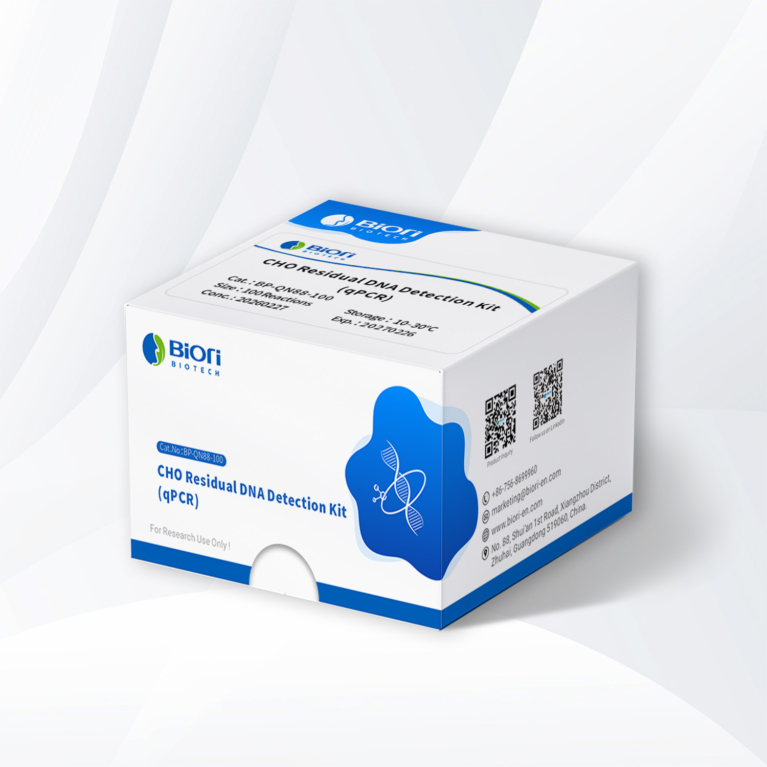
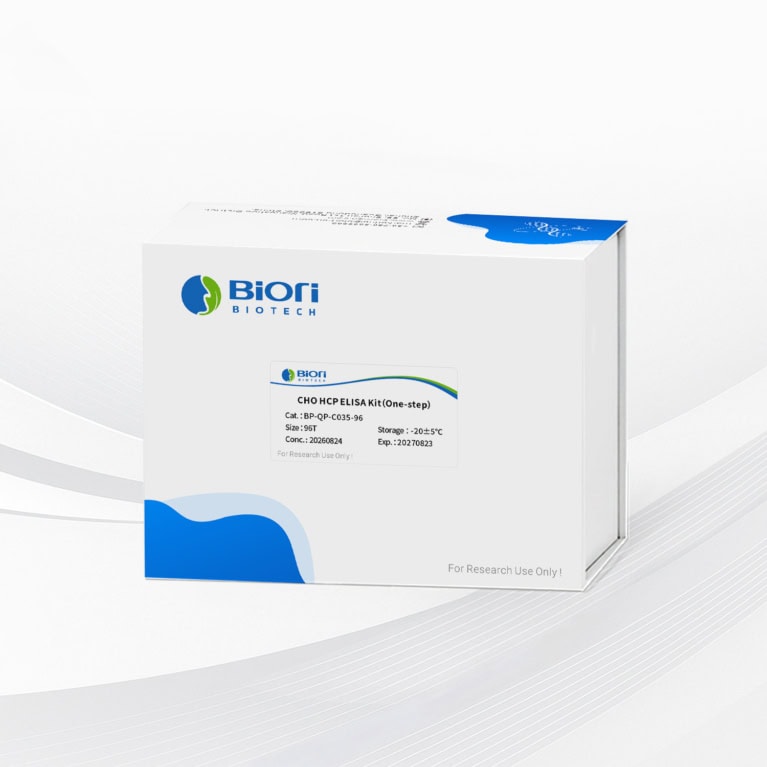
Existing kits already cover common hosts. When your host system or sample matrix is not covered, custom development can be discussed.
Before you start
Questions about HCD & HCP development
Choose the right track and prepare a useful project brief.
How do HCD and HCP assay development differ?
HCD development targets residual host cell DNA using qPCR. HCP development targets host cell proteins using ELISA. The two tracks address different impurity classes, so the appropriate assay depends on what you need to measure.
Which expression systems and sample types can be considered?
The service covers examples including CHO, HEK293, E. coli and yeast, and process samples such as clarified harvest, Protein A eluate, intermediates and drug substance. The final scope depends on your host system, process stage and sample matrix.
What should we include in the first enquiry?
Include the expression host, whether you need HCD or HCP testing, the sample type and process stage, and the intended use: process monitoring, release testing, comparability or technical transfer. Also describe any existing method and your target timeline so these can be considered during project scoping.
How long does a custom HCD or HCP project take?
The timeline depends on the track and scope: whether new antibody development is required (HCP), the host system and sample matrix, the validation characteristics agreed for the intended use, and the kit configuration and documentation required. A project-specific timeline is defined during scoping.
Can the project include an HCP antibody coverage evaluation?
Yes. Coverage evaluation support is included in the HCP customization scope. The antibody strategy, relevant antigen material and coverage work are defined for the host-specific or process-specific project.
What validation and documentation can be included?
The validation scope can cover sensitivity, precision, specificity and interference, linearity and range, recovery and matrix effects, with suitability and stability work as agreed. Quality support includes QA/QC review, batch traceability, and a documentation package such as COA, MSDS and IFU.
Discuss your host system and sample with our team.
Share the impurity you need to measure, your process stage and testing goals to begin a technical discussion.
Frequently asked questions
How do HCD and HCP assay development differ?
HCD development targets residual host cell DNA using qPCR. HCP development targets host cell proteins using ELISA. The two tracks address different impurity classes, so the appropriate assay depends on what you need to measure.
Which expression systems and sample types can be considered?
The service covers examples including CHO, HEK293, E. coli and yeast, and process samples such as clarified harvest, Protein A eluate, intermediates and drug substance. The final scope depends on your host system, process stage and sample matrix.
What should we include in the first enquiry?
Include the expression host, whether you need HCD or HCP testing, the sample type and process stage, and the intended use: process monitoring, release testing, comparability or technical transfer. Also describe any existing method and your target timeline so these can be considered during project scoping.
How long does a custom HCD or HCP project take?
The timeline depends on the track and scope: whether new antibody development is required (HCP), the host system and sample matrix, the validation characteristics agreed for the intended use, and the kit configuration and documentation required. A project-specific timeline is defined during scoping.
Can the project include an HCP antibody coverage evaluation?
Yes. Coverage evaluation support is included in the HCP customization scope. The antibody strategy, relevant antigen material and coverage work are defined for the host-specific or process-specific project.
What validation and documentation can be included?
The validation scope can cover sensitivity, precision, specificity and interference, linearity and range, recovery and matrix effects, with suitability and stability work as agreed. Quality support includes QA/QC review, batch traceability, and a documentation package such as COA, MSDS and IFU.