

Resources & Insights
Technical guides and reagent insights from BIORI for molecular diagnostics, NGS, mRNA and biopharma QC.
Six topics, one for every product line and service.

 Biori14 min read
Build Your Workflow Your Way: Modular Enzymes & Comprehensive Kits for Multi-Platform, Multi-Gen Sequencing
AcuGenix NGS library prep enzymes and modules for standard library prep, tNGS multiplex PCR and single-cell cDNA, with benchmark data vs. leading suppliers.
Read the article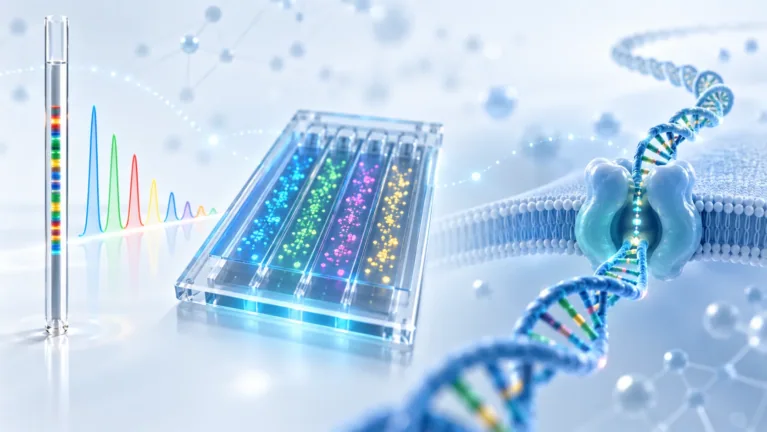 Biori
BioriFrom Sanger to Long-Read Sequencing: A Technical Comparison of First-, Second- and Third-Generation Sequencing Technologies
Compare Sanger, NGS and long-read sequencing (PacBio HiFi, Oxford Nanopore): principles, read length, accuracy, throughput, cost and how to choose.
 Biori
BioriMycoplasma qPCR Testing for Biologics
Learn how to evaluate mycoplasma qPCR testing for biologics, including LoD, target coverage, matrix suitability, controls, and Spiroplasma detection.
 Biori
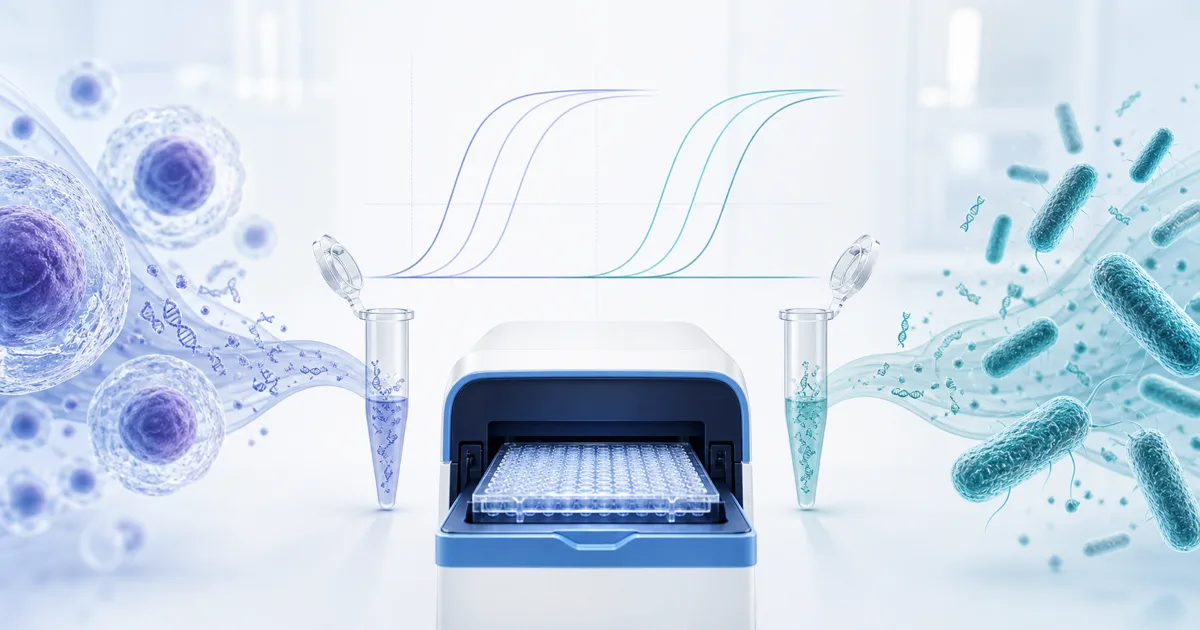
BioriResidual Host Cell DNA Testing by qPCR: Choosing CHO or E. coli Assays
Learn how residual host cell DNA testing by qPCR differs for CHO and E. coli workflows, and how to assess LoD, LoQ, linearity, recovery, and controls.
 Biori
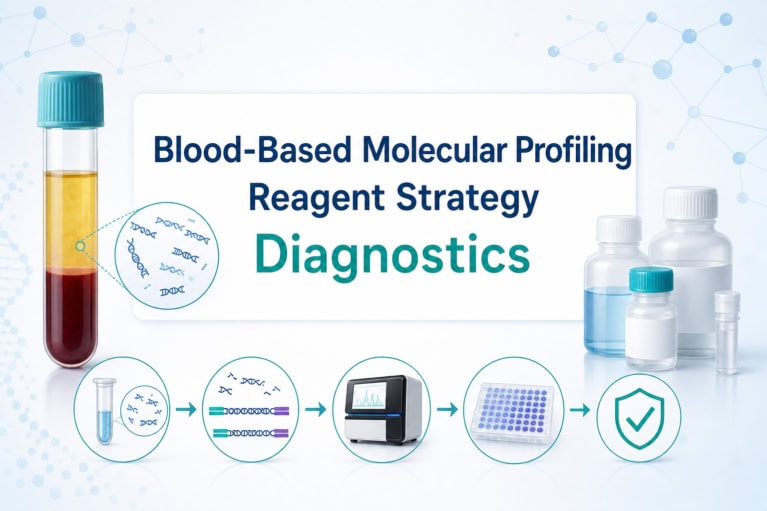
BioriBlood-Based Molecular Profiling Reagent Strategy for Diagnostics
Caris’ NYSDOH application for a blood-based molecular profiling test highlights reagent and QC priorities for cfDNA extraction, NGS library prep, qPCR verification and OEM diagnostics.
 Biori
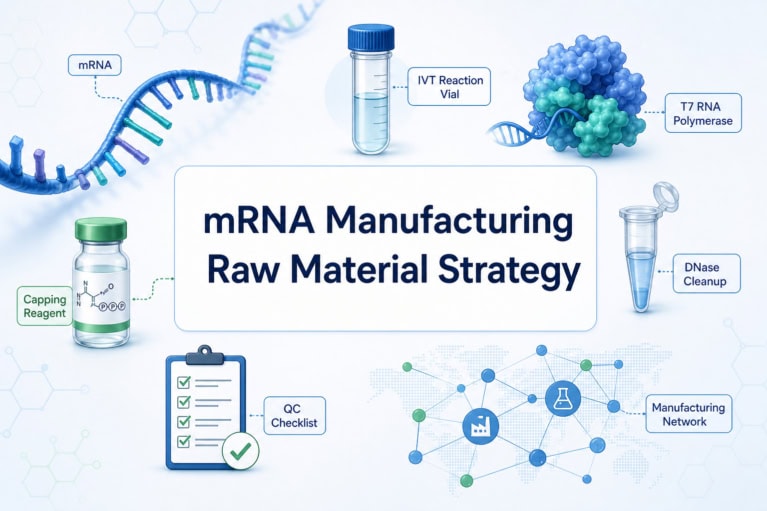
BiorimRNA Manufacturing Raw Material Strategy After Capacity Shifts
Recent mRNA manufacturing capacity shifts highlight why raw material strategy matters. This guide covers GMP-grade IVT enzymes, capping, DNase cleanup, QC and OEM planning for resilient RNA programs.
 Biori
BioriPharmacogenomic Testing Reagent Strategy for Clinical Diagnostics
Foundation Medicine’s new collaboration with Fulgent Genetics highlights rising clinical demand for pharmacogenomic testing. This guide explains reagent, QC and OEM considerations for diagnostic teams.
 Biori
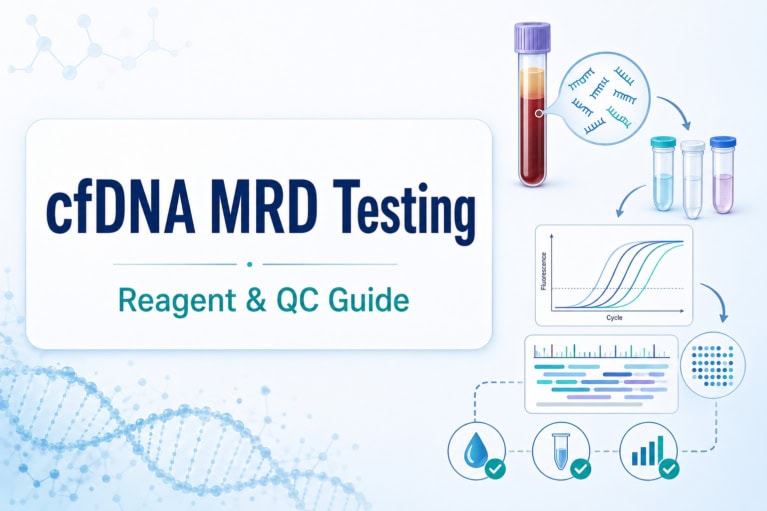
BioricfDNA MRD Testing Reagent Strategy for Molecular Diagnostics
CareDx’s Naveris acquisition highlights rising interest in cfDNA MRD testing. This guide explains reagent, assay QC, sample prep and OEM considerations for molecular diagnostics teams.
 Biori
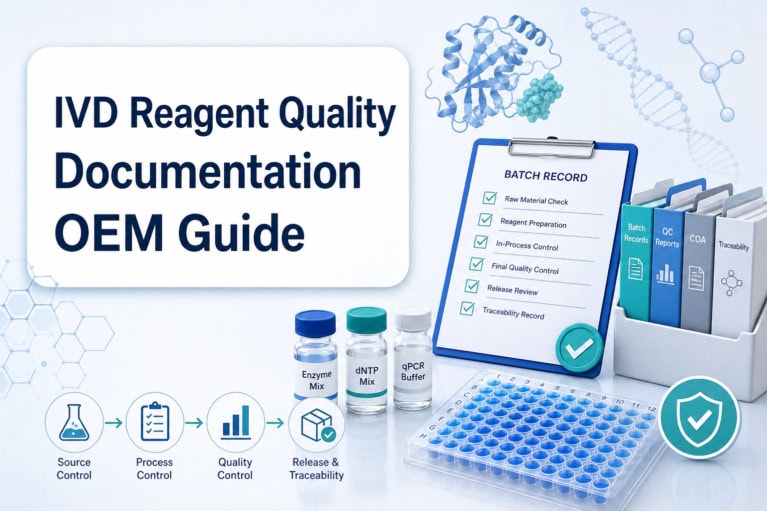
BioriIVD Reagent Quality Documentation for OEM Programs
New FDA Form 483 response guidance highlights documentation discipline. This guide explains what IVD reagent OEM teams should prepare for QC, CoA and traceability.
 Biori
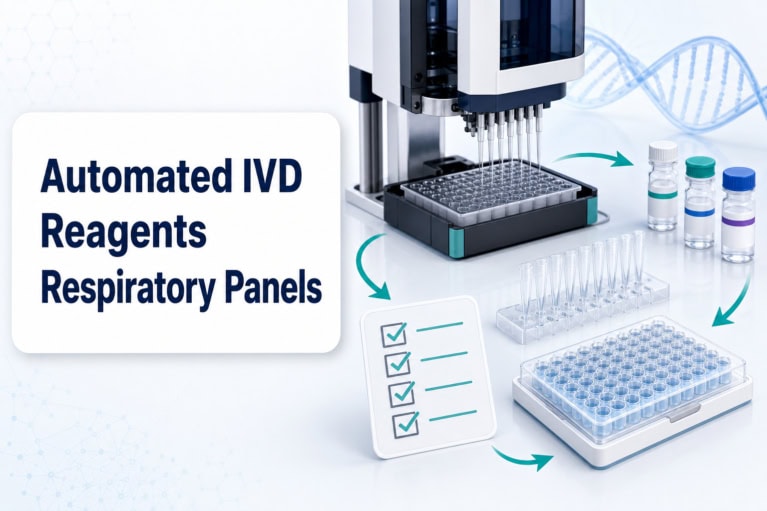
BioriAutomated IVD Reagents for Respiratory Panels: QC and OEM Lessons
Applied BioCode’s new FDA-cleared KingFisher extraction workflow for its respiratory panel highlights why automated IVD reagents need robust QC, OEM documentation and platform compatibility.
 Biori
BioriNGS Sample Preparation for Molecular Diagnostics: Reagent Strategy and QC
A practical guide to NGS sample preparation for molecular diagnostics, covering input QC, library prep reagent selection, workflow consistency, and OEM considerations.
 Biori
BioriResidual DNA Testing for Gene Therapy Manufacturing: A Practical QC Guide
A practical guide to residual DNA testing in gene therapy and biomanufacturing QC, covering method selection, sample prep, HCP/HCD risk, and supplier considerations.
Need help choosing a reagent or format?
Tell us which enzyme or format you are evaluating. Our team replies within one business day.