


Published by Zhuhai Biori Biotechnology Co., Ltd.
Recent industry coverage has highlighted renewed momentum around mRNA bird flu vaccine development for avian influenza, including clinical activity for H5 bird flu candidates. For vaccine developers and CDMOs, the signal is clear: rapid-response mRNA platforms are becoming an important part of pandemic preparedness, but speed must be matched with robust raw materials, reproducible enzymatic workflows, and fit-for-purpose quality control.
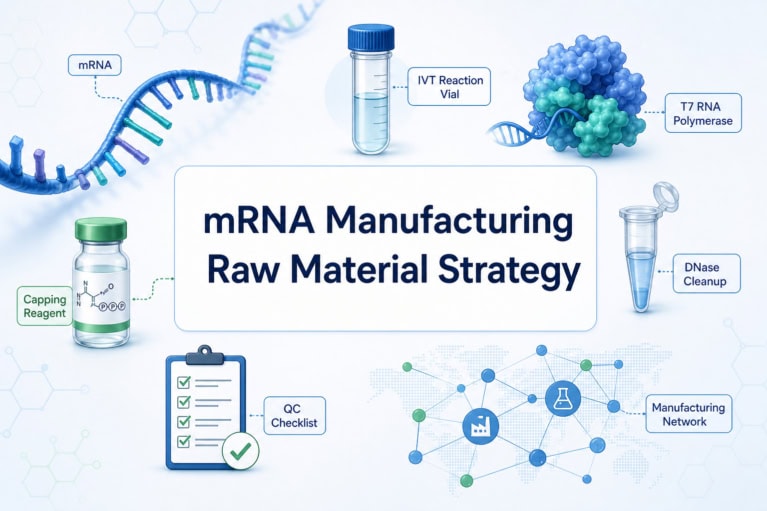
This article reviews the key reagent and QC considerations behind an mRNA vaccine workflow, with a focus on in vitro transcription (IVT) enzymes, capping, nuclease control, residual DNA testing, host cell protein testing, and supply-chain readiness.
Why mRNA Platforms Matter for Avian Influenza Preparedness
Avian influenza outbreaks can evolve quickly, and vaccine development timelines are critical when a novel strain becomes a public health concern. mRNA platforms are attractive because the antigen-coding sequence can be updated rapidly once the target sequence is selected.
However, a fast design cycle is only one part of the manufacturing challenge. Developers also need:
- High-quality DNA template preparation
- Reliable IVT performance
- Efficient capping and poly(A) strategies
- Consistent purification and formulation inputs
- Sensitive analytical assays for process-related impurities
- GMP-ready reagent sourcing and documentation
For global teams building or scaling mRNA programs, reagent selection and QC planning can directly affect batch consistency, release timelines, and regulatory readiness.
mRNA Bird Flu Vaccine Workflow: Core IVT Enzymes and Reagents
DNA Template Preparation
Most mRNA manufacturing workflows begin with a DNA template, often generated from plasmid DNA or a linearized DNA construct. The quality of this template influences IVT yield, transcript integrity, and impurity profiles.
Key considerations include:
- Sequence accuracy and template integrity
- Low residual nuclease contamination
- Efficient linearization or PCR-based template generation
- Compatibility with downstream IVT and purification steps
For PCR-based template preparation, polymerase performance, fidelity, and buffer consistency are important. For plasmid-based workflows, residual host-cell-derived impurities must be monitored and controlled.
In Vitro Transcription Enzymes
IVT is the central enzymatic step in mRNA production. T7 RNA polymerase is commonly used to synthesize RNA from a DNA template, supported by optimized nucleotide mixes, reaction buffers, salts, and additives.
Performance expectations typically include:
- High RNA yield
- Reproducible transcript length distribution
- Low levels of truncated or aberrant products
- Compatibility with modified nucleotides when used
- Scalable reaction performance from development to manufacturing
For suppliers and manufacturers, lot-to-lot consistency and documentation become increasingly important as projects move from research to clinical and commercial stages.
Capping Strategies and Capping Enzymes
The 5′ cap structure is essential for mRNA stability and translation efficiency. Developers may use co-transcriptional capping reagents or post-transcriptional enzymatic capping.
In enzymatic capping workflows, capping enzyme systems and 2′-O-methyltransferase can be used to generate cap structures that support functional mRNA performance. Important evaluation points include:
- Capping efficiency
- Enzyme purity
- Reaction scalability
- Compatibility with the selected mRNA sequence and purification strategy
- Documentation for regulated manufacturing environments
Nuclease Control
Nucleases such as DNase and RNase-related activities play different roles in mRNA workflows. DNase can be used to remove DNA templates after IVT, while unwanted RNase contamination can compromise product integrity.
A strong nuclease-control strategy includes:
- Use of qualified nuclease reagents where required
- RNase-free handling and formulation controls
- Analytical confirmation of template DNA removal
- Stability testing under intended storage and shipping conditions
QC Assays That Support mRNA Vaccine Manufacturing
Residual DNA Testing
Residual DNA testing is a critical QC requirement for biologics and nucleic-acid-based products. In mRNA manufacturing, residual DNA can originate from plasmid templates, host cells used for plasmid production, or PCR/template preparation processes.
Common assay formats include qPCR-based residual DNA detection, which can provide sensitive and specific quantification when properly validated. Important assay characteristics include:
- Specificity for the relevant host or template DNA
- Sensitivity aligned with process and regulatory requirements
- Robust extraction or sample preparation compatibility
- Appropriate controls, standards, and inhibition monitoring
For vaccine, antibody, and cell and gene therapy manufacturing, host cell DNA detection remains a high-value QC category because it connects directly to process safety and release testing.
Host Cell Protein Detection
Host cell protein (HCP) impurities may be introduced through biological raw materials, plasmid production systems, or enzyme manufacturing processes. HCP ELISA remains a widely used method for monitoring process-related protein impurities.
A well-designed HCP testing strategy considers:
- The expression system or host organism used
- Antibody coverage of relevant protein impurities
- Sample matrix compatibility
- Qualification or validation requirements
- Trending across process development and manufacturing lots
For mRNA and broader biopharma QC, HCP assays help teams understand impurity clearance and support process consistency.
Enzyme and Raw Material Qualification
Enzymes used in IVT, capping, template preparation, and impurity removal can influence both process performance and downstream QC outcomes. Teams should evaluate suppliers based on:
- Manufacturing quality system maturity
- ISO 13485, ISO 9001, or GMP-related documentation where applicable
- Lot release testing and certificates of analysis
- Change notification practices
- Custom formulation and lyophilization capabilities
- Glycerol-free or low-temperature-stable formats when required
Why Lyophilized and Glycerol-Free Formats Can Matter
Many enzymatic reagents are supplied in glycerol-containing liquid formats for storage stability. However, some manufacturing and diagnostic workflows require alternative formats to support automation, cold-chain simplification, or lyophilized kit development.
Potential benefits of lyophilized or glycerol-free enzyme formulations include:
- Easier integration into dry reagent formats
- Reduced formulation interference in downstream reactions
- Improved logistics for global distribution
- Better suitability for OEM or contract manufacturing programs
- Simplified workflow design for point-of-care or decentralized applications
These formulation choices should be evaluated carefully because enzyme activity, stability, and reconstitution performance must be preserved.
Supply Chain and OEM Considerations for Rapid-Response Programs
During public health emergencies, developers may face compressed timelines and unpredictable demand. A resilient reagent strategy should address both technical and operational risks.
Key questions include:
- Can the supplier support scale-up from R&D to pilot and manufacturing lots?
- Are custom enzyme formulations, glycerol-free formats, or lyophilization available?
- Is documentation sufficient for regulated or OEM workflows?
- Can the supplier support PCR, RT-qPCR, NGS library preparation, IVT, and QC assay needs across one program?
- Are residual DNA and HCP detection solutions available for process monitoring?
Answering these questions early can reduce delays when a program moves quickly from development to clinical manufacturing.
Practical Checklist for mRNA Vaccine Workflow Reagent Planning
Upstream and Template Preparation
- High-fidelity DNA polymerase or plasmid preparation workflow
- Verified DNA template quality
- Nuclease-controlled handling
- Scalable extraction and purification reagents
IVT and Capping
- Qualified T7 RNA polymerase or IVT enzyme system
- Optimized NTP and buffer components
- Capping reagent or enzymatic capping system
- DNase strategy for template removal
QC and Release Support
- Residual DNA qPCR assay strategy
- HCP ELISA or platform-specific HCP detection
- Nuclease contamination controls
- Identity, purity, integrity, and potency-related analytical methods
- Documentation aligned with clinical or commercial development stage
Helpful Resources and Related BIORI Solutions
- View Biori GMP-grade IVT enzyme and mRNA workflow raw material solutions
- Explore Biori HCD/HCP product selection for biopharma QC
- Learn about Biori OEM and custom manufacturing services
- External reference: CDC avian influenza updates
- External reference: WHO avian influenza information
FAQ: mRNA Bird Flu Vaccine Manufacturing and IVT Raw Materials
Why are IVT enzymes important for an mRNA bird flu vaccine workflow?
IVT enzymes drive RNA synthesis from the DNA template. Their yield, purity, lot-to-lot consistency, and compatibility with capping and purification steps can directly affect development speed and manufacturing reproducibility.
What GMP-grade IVT raw materials are typically needed for mRNA manufacturing?
Typical needs include T7 RNA polymerase or IVT enzyme systems, capping-related enzymes or reagents, nucleotide and buffer components, nuclease control reagents, and QC assay materials. Supplier documentation and quality systems become increasingly important for clinical and commercial programs.
How do residual DNA and HCP tests support mRNA vaccine QC?
Residual DNA testing helps quantify template- or host-cell-derived DNA impurities, while HCP detection monitors process-related protein impurities. Together, they support impurity clearance studies, batch consistency, and release-readiness planning.
Can IVT raw materials be customized for OEM or lyophilized workflows?
Yes. Depending on workflow needs, enzymes and reagents may require custom formulation, glycerol-free formats, lyophilization compatibility, or OEM packaging to support scale-up, automation, and global distribution.
Conclusion
The renewed focus on mRNA vaccines for avian influenza underscores the importance of fast, flexible, and well-controlled manufacturing workflows. IVT enzymes, capping systems, nuclease control, residual DNA testing, and HCP detection are not isolated components—they form an integrated quality framework that helps developers move from sequence design to reliable production.
For mRNA vaccine developers, IVD manufacturers, and biopharma QC teams, the best results often come from planning reagent supply, custom formulation, and analytical control strategies together rather than treating them as separate workstreams.
CTA: Talk to BIORI About Enzymes, OEM Reagents, and Biopharma QC Solutions
BIORI supports international customers with molecular biology enzymes, PCR/RT-qPCR reagents, nucleic acid extraction solutions, NGS-related reagents, custom enzyme engineering, OEM/contract manufacturing, lyophilized and glycerol-free formulation development, and Host Cell DNA / Host Cell Protein residual detection solutions for biopharma QC.
For mRNA and IVT programs, BIORI provides a complete portfolio of GMP-grade IVT raw materials for mRNA manufacturing, including key enzymes and workflow reagents, with OEM/customization support. Our IVT-related raw material support can help teams build more consistent upstream workflows from template preparation and transcription to capping, impurity control, and QC planning.
If you are developing mRNA, molecular diagnostics, vaccine, antibody, or cell and gene therapy workflows, contact BIORI to discuss GMP-grade IVT raw materials, raw material selection, custom formulation, OEM cooperation, and QC assay options for your next project.