


Published by Zhuhai Biori Biotechnology Co., Ltd.
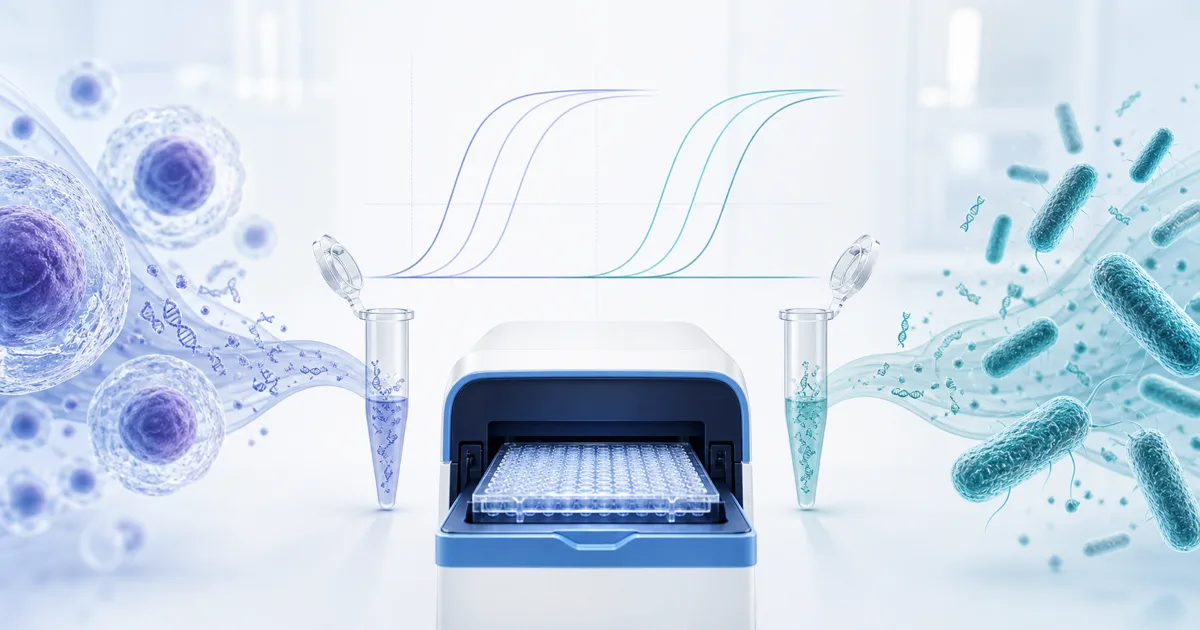
Residual DNA testing is becoming a more visible quality-control topic as gene therapy, cell therapy, mRNA, and other advanced biologics move from research pipelines into late-stage development and commercial manufacturing. Recent industry attention around gene therapy approvals and late-stage CRISPR programs highlights a broader operational reality: manufacturing teams need robust assays, reliable enzymes and reagents, and well-documented supplier quality systems to control process-related impurities.
For biopharma QC teams, residual host cell DNA (HCD) testing is not a single checkbox at release. It is part of a wider control strategy that may also include host cell protein (HCP) detection, nuclease treatment verification, qPCR assay validation, nucleic acid extraction performance, and raw-material traceability.
Explore Biori HCD/HCP product selection for biopharma QC
Why residual DNA testing matters in advanced biologics
Biologics and advanced therapies are often produced using living cells, viral vectors, plasmid templates, or enzymatic RNA workflows. These processes can leave behind host cell DNA, plasmid DNA, template DNA, or other nucleic acid impurities.
- Viral vector manufacturing: producer cell DNA and helper plasmid DNA can remain after downstream purification.
- Cell and gene therapy: complex matrices can challenge extraction and qPCR performance.
- mRNA manufacturing: DNA templates used in IVT must be removed and verified after transcription and DNase treatment.
- Vaccine and recombinant protein workflows: host-cell-derived impurities are part of lot-release and process characterization.
Residual DNA testing workflows: key technical decisions
Sample preparation and nucleic acid extraction
Biopharma samples may contain proteins, salts, lipids, detergents, nucleases, formulation excipients, or high concentrations of therapeutic nucleic acids. These components can inhibit PCR or reduce extraction recovery. QC teams should evaluate extraction chemistry, recovery controls, inhibitor removal, automation compatibility, and matrix effects.
qPCR assay design and reagent robustness
A residual DNA qPCR assay typically targets repetitive or species-specific host cell DNA sequences. Primer and probe design must avoid cross-reactivity with product nucleic acids while maintaining sensitivity at low copy numbers. The master mix, DNA polymerase, buffer system, and stabilizers also matter. For OEM diagnostic or QC reagent developers, lyophilized and glycerol-free formats may improve shipping stability, simplify kit assembly, and support room-temperature workflow design.
Learn about Biori OEM and custom manufacturing services
Controls, standards, and validation
Residual DNA testing should include appropriate standards, negative controls, inhibition controls, and recovery controls. During method validation, teams typically assess specificity, sensitivity, linearity, accuracy, precision, robustness, and matrix effects. For GMP environments, documentation and lot-to-lot consistency of critical reagents are just as important as analytical performance.
Connecting HCD and HCP testing in biopharma QC
Host cell DNA and host cell protein testing are often managed as separate assays, but they address the same strategic question: how well is the manufacturing process removing process-related impurities? HCD testing focuses on residual nucleic acids, while HCP detection measures protein impurities from the production host cell line.
| QC area | Common method | Key reagent considerations |
|---|---|---|
| Host cell DNA / residual DNA | qPCR or digital PCR | Extraction reagents, DNA polymerase, primers/probes, standards, inhibitor control |
| Host cell protein | ELISA or orthogonal immunoassays | Antibodies, calibrators, buffers, matrix compatibility, kit consistency |
| mRNA IVT template removal | DNase treatment plus DNA quantification | DNase, RNA polymerase workflow reagents, residual DNA assay design |
Residual DNA testing in mRNA and IVT manufacturing
In mRNA production, in vitro transcription (IVT) uses a DNA template and RNA polymerase to generate RNA. After transcription, the DNA template is typically digested with DNase and removed during purification. Residual DNA testing verifies that the process has reduced DNA to an acceptable level and that the final RNA product is suitable for downstream use.
- RNA polymerase performance and impurity profile
- Capping enzyme and cap analog workflow compatibility
- DNase efficiency and ease of removal
- RNase-free buffers and nucleotide quality
- qPCR reagents for DNA template quantification
- GMP-grade availability for clinical or commercial programs
View Biori GMP-grade IVT enzyme and mRNA workflow raw material solutions
How to choose reagents and suppliers for residual DNA testing
When selecting reagents for residual DNA testing, procurement teams should look beyond unit price. Key supplier questions include analytical fit, format flexibility, ISO 13485/ISO 9001/GMP-aligned quality controls, customization capability, documentation, change control, and scale readiness.
- Analytical fit: Can the reagents achieve the required sensitivity and specificity in the actual product matrix?
- Format flexibility: Are liquid, lyophilized, glycerol-free, or OEM-ready formats available?
- Quality system: Does the supplier operate under ISO 13485, ISO 9001, or GMP-aligned controls where appropriate?
- Customization: Can enzymes, buffers, and kits be adjusted for unusual workflows or sample types?
- Documentation: Are CoA, lot traceability, stability data, and change notifications available?
Practical checklist for residual DNA testing projects
- Define the impurity source: host cell DNA, plasmid DNA, template DNA, or process carryover.
- Map the sample matrix and likely PCR inhibitors.
- Select extraction chemistry and include recovery controls.
- Design qPCR primers/probes and standards around the relevant target.
- Evaluate master mix robustness and lot-to-lot consistency.
- Validate sensitivity, specificity, precision, linearity, and matrix effects.
- Connect HCD results with HCP and downstream purification data.
- Confirm supplier quality documentation and change-control practices.
FAQ: residual DNA testing and biopharma QC
What is residual DNA testing?
Residual DNA testing measures DNA impurities left from host cells, plasmids, templates, or production processes. It is commonly used in biologics, vaccines, gene therapy, cell therapy, and mRNA manufacturing QC.
Why is qPCR commonly used for host cell DNA testing?
qPCR is widely used because it is sensitive, specific, scalable, and compatible with validated QC workflows. Assay performance depends on extraction recovery, primer/probe design, master mix robustness, and inhibition control.
How is residual DNA testing related to HCP detection?
Residual DNA testing and HCP detection both monitor process-related impurities. HCD assays measure nucleic acid impurities, while HCP assays measure protein impurities. Together they provide a more complete picture of purification performance.
Does mRNA manufacturing require residual DNA testing?
mRNA IVT workflows use DNA templates, so manufacturers typically need to verify DNA template removal after DNase treatment and purification.
External references
- BioPharma Dive: Intellia CRISPR drug succeeds in late-stage study
- BioPharma Dive: FDA approves Regeneron’s hearing loss gene therapy
Work with BIORI
BIORI supports molecular diagnostics, IVD raw materials, PCR/RT-qPCR, nucleic acid extraction, NGS library preparation, HCP/HCD residual testing, custom enzyme engineering, lyophilized and glycerol-free formulations, and OEM/contract manufacturing. BIORI provides a complete portfolio of GMP-grade IVT raw materials for mRNA manufacturing, including key enzymes and workflow reagents, with OEM/customization support.
CTA: If you are developing a residual DNA testing workflow, a biopharma QC kit, or an mRNA IVT manufacturing process, contact BIORI to discuss GMP-grade enzymes, qPCR reagents, HCP/HCD solutions, lyophilized formulations, and OEM reagent manufacturing tailored to your application.