

NGS & genomics
Guides, reagent insights and news from BIORI on nGS & genomics.
NGS & genomics: explore the sub-topics.
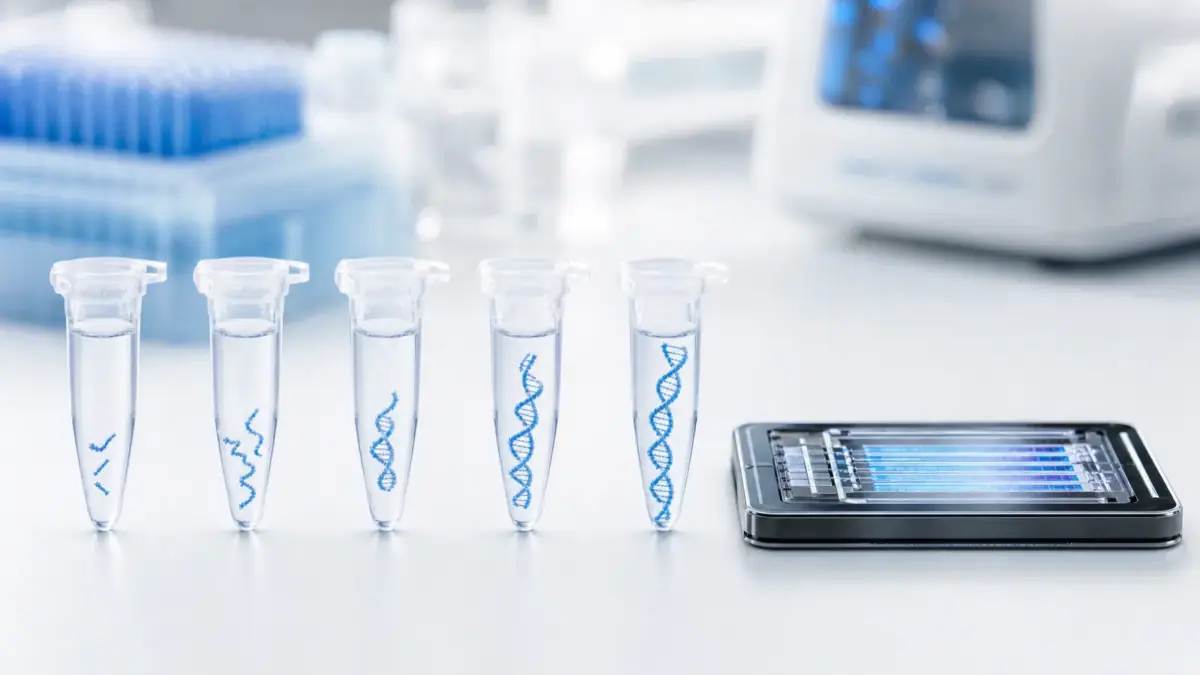
 BioriResources & Insights16 min read
NGS Library Preparation: The Five Steps and the Enzymes Behind Each
NGS library preparation in five steps, from fragmentation to bead cleanup, with the enzyme behind each step and the QC metric it controls.
Read the article BioriResources & Insights
Multiple Displacement Amplification With phi29: WGA From Trace DNA
Multiple displacement amplification with phi29 turns picograms of DNA into micrograms at 30 °C: workflow, key parameters, WGA comparison and coverage bias.
 BioriResources & Insights
A New Layer of Alzheimer’s Risk: Hybrid Long-Read and Short-Read Sequencing
Structural variants in Alzheimer's disease: how long-read discovery plus short-read genotyping in 3,190 people found a FAM193B CCG repeat that SNP arrays miss.
 BioriResources & Insights
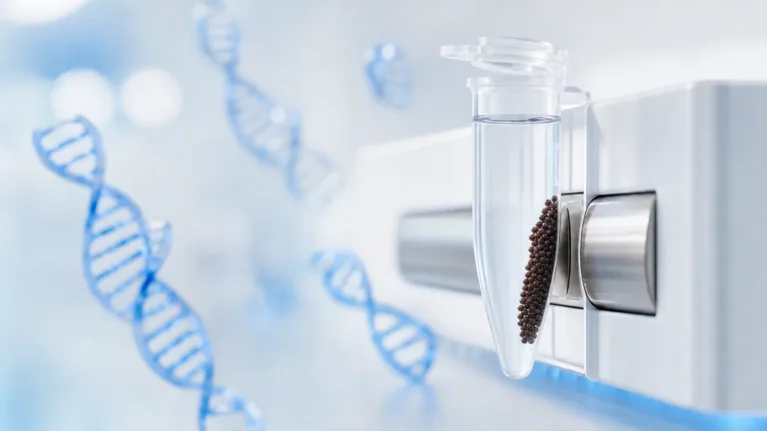
SPRI Beads: Cleanup and Size Selection Ratio Table With Recovery Data
SPRI beads: ratio tables for cleanup and double-sided size selection, recovery data across ratios and inputs, and tips for long-read, FFPE and automated runs.
 BioriResources & Insights
End Repair and dA-Tailing: T4 PNK, T4 DNA Polymerase and Klenow
What T4 PNK, T4 DNA polymerase, Klenow and Klenow exo⁻ each do in end repair and dA-tailing, with reaction conditions, FFPE and cfDNA notes, and an FAQ.
 BioriResources & Insights
Beyond the Gene List: How Smart-seq3 Delivers Transcript-Level Single-Cell Insights
Smart-seq3 adds 5′ UMI counting to full-length single-cell RNA-seq: what it reveals, how it works, Smart-seq3xpress scaling, and the enzymes behind each step.
 BioriResources & Insights
SPARK-seq (Science 2026): Single-Cell CRISPR Screens for Aptamer Discovery
SPARK-seq (Science 2026) pairs CRISPR knockout pools with single-cell multiomics for aptamer discovery, mapping 5,535 aptamers to 8 membrane proteins.
 BioriResources & Insights
Build Your Workflow Your Way: Modular Enzymes & Comprehensive Kits for Multi-Platform, Multi-Gen Sequencing
AcuGenix NGS library prep enzymes and modules for standard library prep, tNGS multiplex PCR and single-cell cDNA, with benchmark data vs. leading suppliers.
 BioriResources & Insights
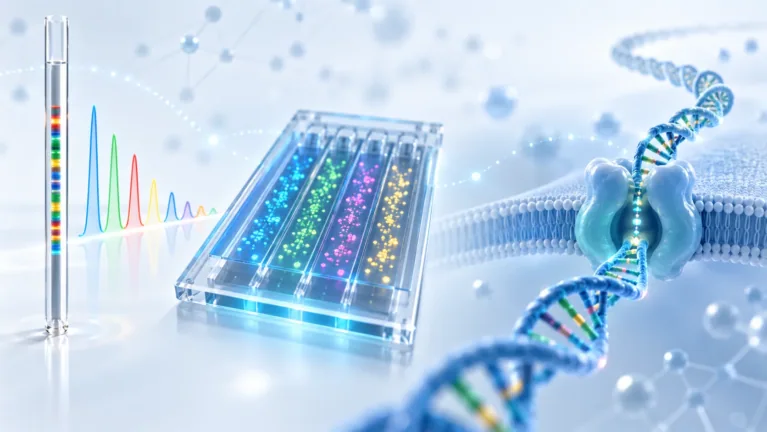
From Sanger to Long-Read Sequencing: A Technical Comparison of First-, Second- and Third-Generation Sequencing Technologies
Compare Sanger, NGS and long-read sequencing (PacBio HiFi, Oxford Nanopore): principles, read length, accuracy, throughput, cost and how to choose.
 BioriResources & Insights
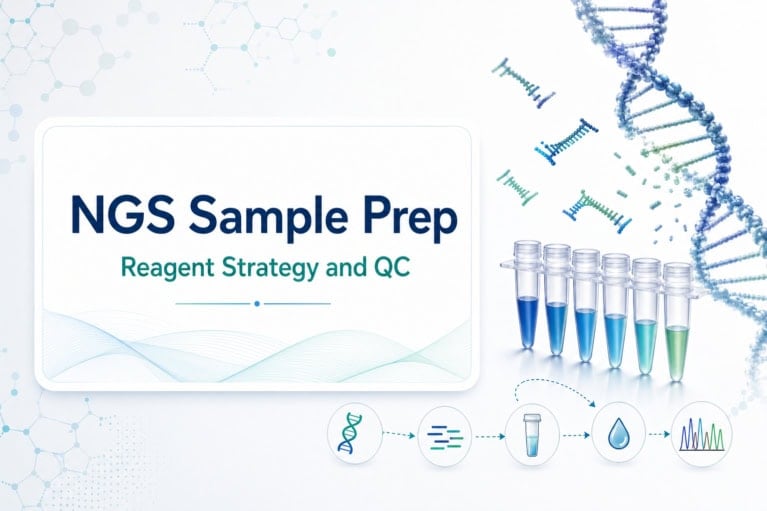
NGS Sample Preparation for Molecular Diagnostics: Reagent Strategy and QC
A practical guide to NGS sample preparation for molecular diagnostics, covering input QC, library prep reagent selection, workflow consistency, and OEM considerations.
 BioriResources & Insights
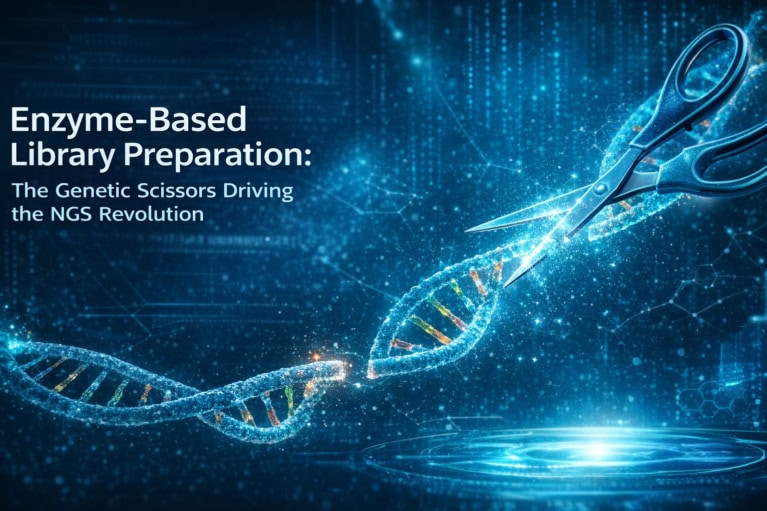
Enzyme-Based Library Preparation: The Genetic Scissors Driving the NGS Revolution
Enzyme-based library preparation is reshaping next-generation sequencing by simplifying DNA fragmentation, improving automation compatibility, and reducing sample loss. This article explains how enzymatic fragmentation is driving the NGS revolution.
Need help choosing a reagent or format?
Tell us which enzyme or format you are evaluating. Our team replies within one business day.