

Published by Zhuhai Biori Biotechnology Co., Ltd.
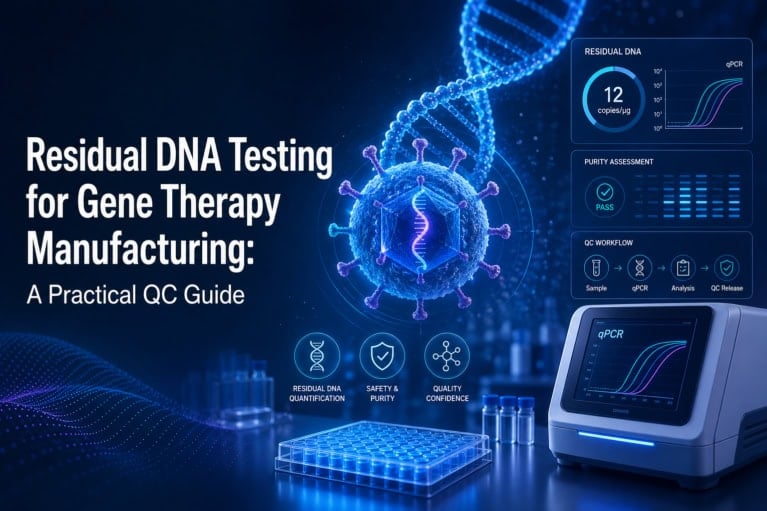
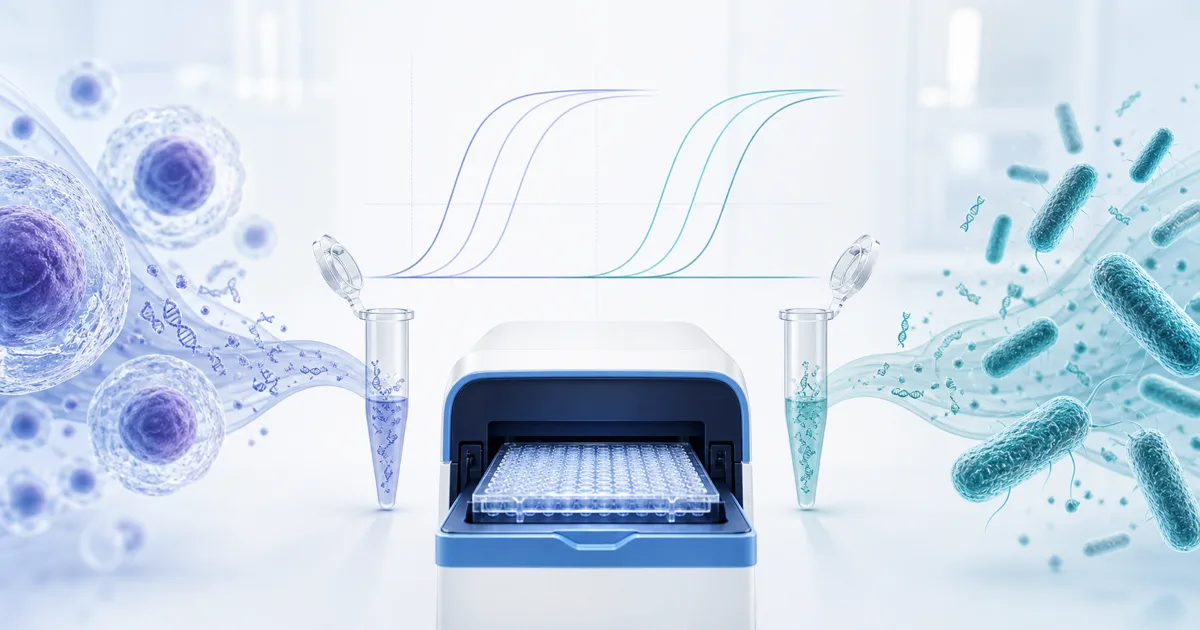
Residual host cell DNA testing measures trace DNA from the production host that remains after downstream processing. A qPCR assay should match the expression system. CHO-derived processes require a CHO-specific assay, while E. coli-derived processes require an E. coli-specific assay, because their target sequences, standards, controls, sample preparation, and matrix performance are not interchangeable.
Residual DNA is a process-related impurity in biopharmaceutical manufacturing. Testing may be used during process development, process characterization, in-process monitoring, or final-product quality control, depending on the product and the manufacturer’s control strategy. USP General Chapter <509> describes residual host cell DNA measurement for recombinant therapeutic products produced in E. coli or CHO cell lines and includes an extraction procedure before qPCR.
This guide explains how to select between CHO and E. coli assays and how to evaluate the evidence behind a residual DNA qPCR kit. It is educational content and does not establish that a particular method complies with a pharmacopeia or regulatory requirement.
For a product-selection path, use the host cell DNA qPCR product selection guide.
Why must a residual DNA assay match the production host?
Residual DNA assays use primers and probes directed at sequences from a defined host genome. A CHO assay is designed to detect CHO-derived genomic DNA. An E. coli assay is designed to detect E. coli-derived genomic DNA. The correct choice therefore begins with the cell substrate used to manufacture the biological product.
| Production context | Appropriate assay direction | Typical question |
|---|---|---|
| A recombinant protein, antibody, or other product manufactured in a CHO expression system | CHO residual DNA qPCR assay | Can the method quantify CHO-derived DNA in the actual process matrix? |
| A recombinant protein or other product manufactured in an E. coli expression system | E. coli residual DNA qPCR assay | Can the method recover and quantify E. coli DNA after sample preparation? |
| A platform using another host, such as HEK293, Vero, yeast, or insect cells | A host-specific method for that substrate | Is a validated assay available for the relevant host and matrix? |
One generic residual DNA result cannot be assumed to cover multiple host systems. Target specificity, DNA fragmentation, extraction recovery, matrix interference, standards, and acceptance criteria should be assessed for the intended use.
What does a residual host cell DNA qPCR workflow include?
A complete workflow is more than an amplification reagent. The final result depends on sample preparation, controls, calibration, amplification, and data review.
1. Define the sample and intended use
Identify the production host, sample type, process stage, expected residual DNA level, reporting unit, sample volume, and required sensitivity. An in-process sample can behave differently from a purified final-product matrix. The method should be evaluated in the material in which it will actually be used.
2. Prepare the sample
Residual DNA may be present at a very low level in a matrix containing proteins, salts, excipients, nucleases, or other components that affect recovery or amplification. Sample preparation can release, concentrate, and purify DNA before qPCR. Published CHO residual DNA work has shown that sample pretreatment and matrix properties can materially affect recovery, so a preparation method should not be treated as universally suitable.
3. Run standards and controls
A quantitative qPCR method normally uses a DNA standard series to generate a calibration curve. Negative controls help identify contamination. An internal standard or extraction control can help reveal poor recovery or PCR inhibition. The exact controls and acceptance rules should be defined in the method and verified in the user’s workflow.
4. Amplify the host-specific target
Primers and a fluorescent probe detect sequences associated with the relevant host. The measured Cq or Ct values are interpreted against the calibration curve. Instrument settings, reaction volume, threshold settings, and data-analysis rules should be controlled because changes can affect the reported result.
5. Review system suitability and sample validity
Before reporting a sample result, verify that the standard curve and required controls performed as expected. A result should not be accepted solely because the software generated a concentration. The method’s calibration, controls, recovery, precision, and applicable range must support the interpretation.
Which performance characteristics should be reviewed?
The strongest product page does not simply say that a kit is sensitive. It shows how analytical performance was evaluated and keeps acceptance criteria separate from observed study results.
Linearity and analytical range
Linearity describes the relationship between the analytical response and analyte concentration across an evaluated range. Review the concentrations included, number of levels, regression result, amplification efficiency where reported, and whether the range covers the intended sample concentrations.
Limit of detection
The limit of detection, or LoD, is the lowest evaluated level at which the analyte can be detected under the defined study conditions. Detection at one concentration should be interpreted with its replicate design and method conditions. LoD is not the same as a level that can be quantified with suitable accuracy and precision.
Limit of quantitation
The limit of quantitation, or LoQ, is the lowest evaluated level at which the analyte can be quantitatively reported with the method’s defined performance. Review precision and bias at the proposed LoQ instead of treating the concentration alone as sufficient evidence.
Recovery and matrix suitability
Recovery studies add a known amount of host DNA to the sample workflow and compare the measured result with the expected result. Recovery can help show whether extraction loss or matrix interference affects quantitation. Results from one matrix should not be generalized to every formulation or process sample.
Precision and robustness
Precision can include repeatability and intermediate precision across analysts, instruments, days, or reagent lots. Robustness evaluates the effect of defined method variations. The required study design should follow the intended use and the manufacturer’s validation strategy.
Selected Biori product-specific validation data
Biori currently provides separate qPCR products for CHO and E. coli residual DNA testing. The values below are selected, product-specific results. They are not universal performance guarantees. Full evidence and study limitations remain on the respective product pages.
| Product | Intended host | Selected validation summary |
|---|---|---|
| CHO Residual DNA Detection Kit (qPCR), BP-QN88 | CHO | Evaluated linear range: 0.5 fg/μL to 300 pg/μL; LoQ: 0.5 fg/μL; LoD: 0.125 fg/μL. The product-specific study reported a correlation coefficient of 0.9999 and amplification efficiency of 98.69% across the evaluated range. At 0.125 fg/μL, 30 of 30 replicates were detected. Observed recovery values in the selected table ranged from 92.69% to 112.68%. |
| E. coli Residual DNA Detection Kit (qPCR), BP-QN24 | E. coli | Evaluated linear range: 5 fg/μL to 300 pg/μL; LoQ: 5 fg/μL; LoD: 1 fg/μL. The product-specific study reported a correlation coefficient of 0.99982 and amplification efficiency of 99.26% across the evaluated range. At 5 fg/μL, the mean concentration was 4.71E+00 fg/μL, with 12.40% CV and 5.70% accuracy bias across 10 replicates. Observed recovery values in the selected table ranged from 79.75% to 90.41%. |
The studies used defined reference materials, sample preparation, instruments, and conditions. Users should verify suitability with their own sample matrix, process stage, instrument, and reporting requirements.
How should a manufacturer choose between the two assays?
Use the production host as the first decision point. Then assess whether the kit’s workflow and evidence fit the intended sample and quality-control strategy.
Choose the CHO assay direction when:
- the biological product is manufactured using a CHO expression system;
- the target impurity is CHO-derived host cell DNA;
- the user’s required range and matrix can be evaluated against the CHO method;
- the required instrument, controls, and sample-preparation workflow are compatible with the proposed method.
Choose the E. coli assay direction when:
- the product or intermediate is manufactured using an E. coli expression system;
- the target impurity is residual E. coli genomic DNA;
- the extraction and recovery workflow is suitable for the actual sample matrix;
- the proposed calibration and internal-control strategy supports the intended measurement.
If the expression host is neither CHO nor E. coli, do not select either kit merely because the analytical range appears suitable. A different host-specific assay or a custom method may be required.
qPCR or dPCR for residual DNA quantitation?
qPCR and digital PCR can both be used to quantify residual host cell DNA, but they use different measurement approaches. qPCR generally quantifies against a calibration curve. Digital PCR partitions the reaction and can provide absolute quantitation based on positive and negative partitions. The appropriate platform depends on the laboratory’s intended use, equipment, validation strategy, matrix, sensitivity needs, and established workflow.
An FDA research poster described a direct ddPCR method for E. coli residual DNA in selected protein therapeutics. That work should not be interpreted as proof that dPCR is automatically preferable for every residual DNA method. Laboratories should compare the technologies within their own analytical and quality context.
Supplier-evaluation checklist
Before adopting a residual host cell DNA kit, request evidence that allows the method to be assessed rather than relying on a short sensitivity claim.
- Confirm the production host and target sequence strategy.
- Review the intended sample types and required sample-preparation procedure.
- Check the calibration range, LoD, LoQ, recovery, precision, and applicable study conditions.
- Review internal standards, extraction controls, negative controls, and system-suitability rules.
- Confirm instrument and analysis requirements.
- Request the current instruction manual, COA, MSDS, and available validation summary.
- Evaluate the assay in representative matrices before routine use.
- Confirm batch traceability, change-control communication, and technical support within the agreed supplier-qualification scope.
Frequently asked questions
What is residual host cell DNA?
Residual host cell DNA is DNA or DNA fragments derived from the cells used to manufacture a biological product that remain after downstream processing. It is treated as a process-related impurity and may be monitored during development, process validation, in-process control, or final-product testing.
Can the same qPCR kit measure both CHO and E. coli residual DNA?
Not if the assay is designed around host-specific primers, probes, and standards. CHO and E. coli are different biological hosts with different genomes. Use an assay intended for the actual production substrate.
What is the difference between LoD and LoQ?
LoD is the lowest evaluated level at which the target can be detected under defined conditions. LoQ is the lowest evaluated level that can be quantitatively reported with the method’s required accuracy and precision. A detectable result is not automatically a reliable quantitative result.
Why is recovery important?
Recovery helps assess the combined effect of sample preparation and matrix interference. A known amount of DNA is added to the workflow, and the measured amount is compared with the expected amount. Recovery observed in one product matrix should not be assumed for another matrix.
Does supplier validation remove the need for user verification?
No. Supplier data can support method selection and qualification, but users should confirm suitability for their own sample matrix, process stage, instrument, operators, reporting unit, and quality system.
Which documents should be requested during supplier qualification?
Common requests include the current instruction manual, COA, MSDS, product-specific validation information, storage and transport requirements, batch traceability information, and applicable change-control or audit-support documentation.
Discuss your residual DNA testing workflow
If your process uses a CHO or E. coli expression system, Biori can discuss the sample type, intended range, controls, documentation, and evaluation plan before routine adoption.
- Review the CHO Residual DNA Detection Kit (qPCR), BP-QN88.
- Review the E. coli Residual DNA Detection Kit (qPCR), BP-QN24.
- Discuss a custom HCD/HCP assay development workflow.
- Contact Biori to request a technical discussion, quotation, sample evaluation, or documentation package.
References
- United States Pharmacopeia. USP General Chapter <509>, Residual DNA Testing.
- Zheng W, Jiang H, et al. Development and validation of quantitative real-time PCR for the detection of residual CHO host cell DNA and optimization of sample pretreatment method in biopharmaceutical products. Biological Procedures Online. 2019.
- Thermo Fisher Scientific. Residual Host Cell DNA Quantitation Assay Kits.
- U.S. Food and Drug Administration. Direct Analysis of Residual Host Cell DNA by Droplet Digital PCR in Biologic Drugs Produced in E. coli. 2021 FDA Science Forum.