Skip to content
Lab ToolsFREE
ISO 13485 & 9001 certified
Lab calculator

Molarity & Dilution Calculator

Find the mass to weigh for a target molar concentration, solve C1V1 = C2V2 dilutions, and convert between M, mM, µM, nM, pM and mg/mL. It all runs in your browser; nothing you enter is sent anywhere.

Calculate
MWCalculated
g/mol

CCalculated

VCalculated

mCalculated

Result
–

Results are rounded to 4 significant figures. Check the MW on your reagent’s label before weighing.

How it works

The three formulas behind the calculator

01 · Mass and molarity
m = C × V × MW

Molarity is moles of solute per liter of solution. Multiply the concentration you want by the final volume to get moles, then by the molecular weight to get grams. Rearranged, C = m ÷ (V × MW) and V = m ÷ (C × MW).

m
Mass of solute to weigh, in grams (g)
C
Molar concentration, in mol/L (M)
V
Final volume of solution, in liters (L)
MW
Molecular weight (molar mass) of the solute, in g/mol
02 · Dilution
C1 × V1 = C2 × V2

The amount of solute you take from the stock is the amount that ends up in the diluted solution. Solve for the missing term, for example V1 = C2 × V2 ÷ C1. The diluent to add is V2 − V1, and the dilution factor is C1 ÷ C2.

C1
Concentration of the stock solution
V1
Volume of stock to take
C2
Concentration you want after dilution
V2
Final total volume, stock plus diluent
03 · Units
cmg/mL = CM × MW

Molar units step by factors of 1,000. Because 1 mg/mL equals 1 g/L, multiplying molarity (mol/L) by MW (g/mol) gives mass concentration in mg/mL directly; divide by MW to go back.

Molar concentration units
UnitNameIn mol/L1 M equals
Mmolar11 M
mMmillimolar10⁻³ (0.001)1,000 mM
µMmicromolar10⁻⁶10⁶ µM
nMnanomolar10⁻⁹10⁹ nM
pMpicomolar10⁻¹²10¹² pM
Worked examples

Two calculations you will do at the bench

Example 1 · Mass

Make 500 mL of 1 M Tris stock

Target C
1 M
Final V
500 mL = 0.5 L
MW, Tris base
121.14 g/mol
m = C × V × MW= 1 mol/L × 0.5 L × 121.14 g/mol= 60.57 g

Dissolve 60.57 g of Tris base in about 400 mL of water, adjust the pH with HCl, then adjust the volume to 500 mL with water. Adjust the volume last, because adding acid changes it.
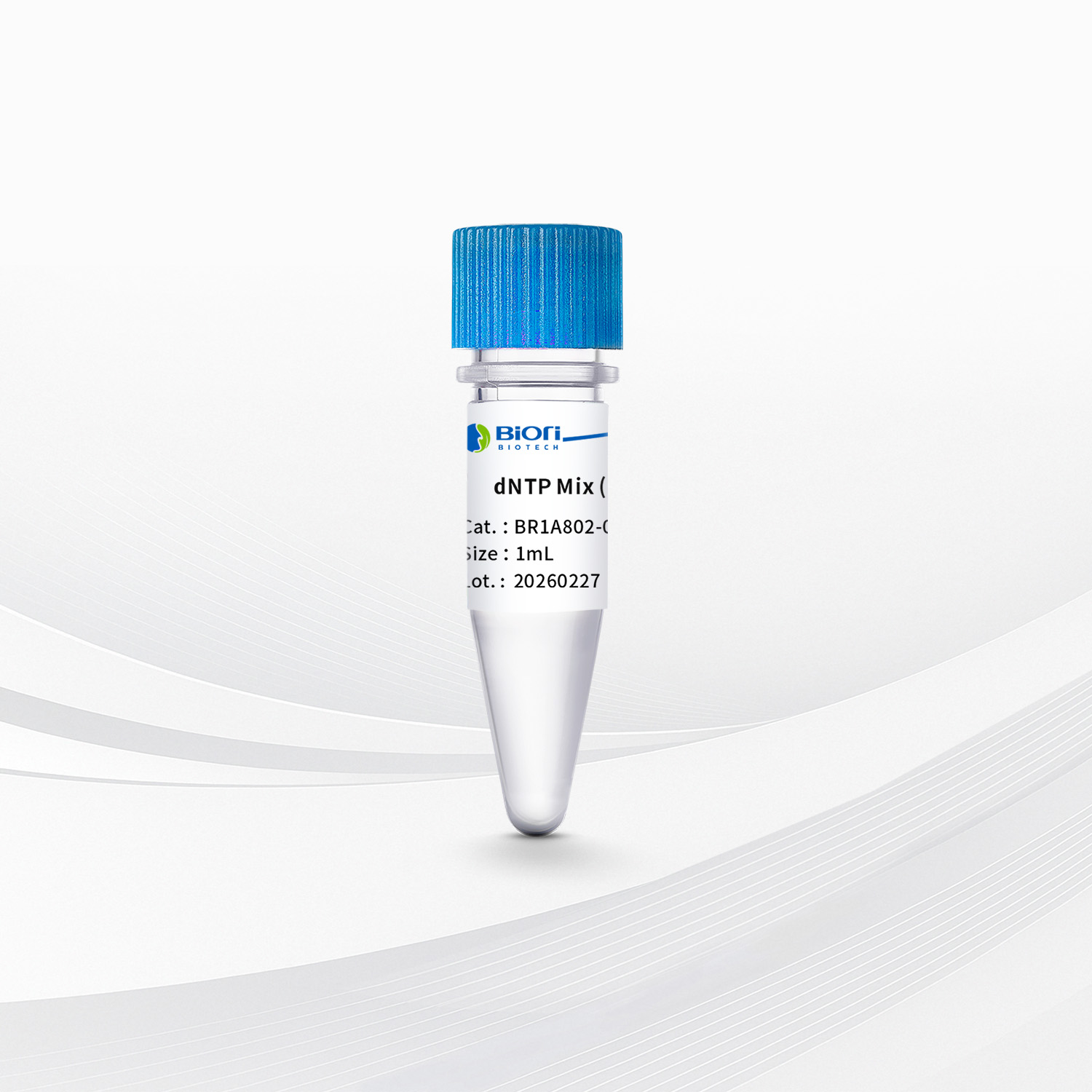
Example 2 · Dilution

Add dNTPs to a 50 µL PCR

Stock C1
10 mM each = 10,000 µM
Final C2
200 µM each
Reaction V2
50 µL
V1 = C2 × V2 ÷ C1= 200 µM × 50 µL ÷ 10,000 µM= 1 µL

Add 1 µL of the 10 mM dNTP mix, then the other reaction components, and water to a final volume of 50 µL. 200 µM of each dNTP is a common final concentration; follow your polymerase’s protocol if it says otherwise.

FAQ

Questions about molarity and dilutions

What is the difference between molarity and molality?

Molarity (M) is moles of solute per liter of solution (mol/L). Molality (m) is moles of solute per kilogram of solvent (mol/kg). Molarity is what you use when you prepare a solution to a final volume at the bench. Because liquid volume changes slightly with temperature, molarity does too, while molality does not. This calculator works in molarity.

How do I convert mM to M, µM or nM?

Each step on the scale M → mM → µM → nM → pM is a factor of 1,000. To go to a larger unit, divide by 1,000; to go to a smaller unit, multiply by 1,000. For example, 250 mM = 0.25 M, and 50 µM = 0.05 mM = 50,000 nM. The unit converter tab above shows every unit at once.

How do I convert mg/mL to molarity?

1 mg/mL is the same as 1 g/L, so divide by the molecular weight in g/mol: M = (mg/mL) ÷ MW. A 2 mg/mL solution of a 50 kDa protein (50,000 g/mol) is 2 ÷ 50,000 = 4 × 10⁻⁵ M, or 40 µM. Going the other way, multiply molarity by MW to get g/L (mg/mL).

Which molecular weight should I use for a hydrated salt?

Use the formula weight on the label of the exact form you are weighing, including any water of crystallization. MgCl₂ · 6H₂O is 203.30 g/mol, while anhydrous MgCl₂ is 95.21 g/mol, so using the wrong one makes your solution about twice as strong or half as strong as intended. The values in the reagent list are for the forms named there.

Can I use C1V1 = C2V2 with mg/mL or “×” stocks?

Yes. The equation works with any concentration unit, as long as C1 and C2 are in the same kind of unit (both molar, both mass per volume, or both “×”). The calculator converts between M, mM, µM and the other units for you. For very large dilutions, such as 10,000-fold, dilute in two or more steps (for example 100-fold, then 100-fold). Pipetting error is largest at very small volumes, and a stepwise dilution keeps every transfer at a volume you can pipette accurately.

Talk to an expert

Not ready for a quote? Discuss feasibility, formats, host systems or validation with the specialist behind this page — no sales script.

Topic detected: your enquiry

Reply within one business day from an application scientist. For pricing, COA or samples, use Request a quote instead.

Application scientistAssay integration & formats

Tell us what you want to discuss

Four fields. We route it to the right person and reply the way you prefer.

🔒 Used only to reply to this request. No newsletters. Privacy Policy

Need pricing, a COA or samples? Request a quote →

Quick Contact

* Your data is securely protected for essential communications only. We won’t share your details or send spam emails, Privacy Policy *