
Robustart Fast Taq DNA Polymerase-V2
Fast hot-start Taq DNA polymerase optimized for rapid PCR amplification and inhibitor-tolerant nucleic acid detection.

Product overview
Robustart Fast Taq DNA Polymerase-V2 is a hot-start fast amplification DNA polymerase developed by Biori. The enzyme effectively suppresses non-specific amplification caused by primer misannealing or primer-dimer formation during PCR setup and amplification.
This enzyme features rapid DNA amplification capability and improved tolerance to common PCR inhibitors, enabling reliable amplification even from low-concentration templates. Robustart Fast Taq DNA Polymerase-V2 is suitable for conventional PCR, rapid PCR assays, multiplex PCR, and nucleic acid detection applications.
Available versions
| Cat. no. | Product name | Formulation | Residual DNA level |
|---|---|---|---|
| E20 | Robustart Fast Taq DNA Polymerase-V2 | Liquid (with glycerol) | Standard |
| FE20 | Robustart Fast Taq DNA Polymerase-V2 (Glycerol-Free) | Glycerol-free | Standard |
| E20-NA | Robustart Fast Taq DNA Polymerase-V2-Low DNA | Liquid (with glycerol) | Low Residual DNA |
| FE20-NA | Robustart Fast Taq DNA Polymerase-V2-Low DNA (Glycerol-Free) | Glycerol-free | Low Residual DNA |
Features and applications
- Antibody modification, 95°C, 30s-1min hot start.
- The amplification speed is fast, no less than 1kb per 10 seconds.
- Highly resistant to inhibitors from sources such as blood and swabs.
- Endpoint method, Quantitative PCR.
- Rapid amplification, direct amplification, nucleic acid Application of POCT (Point-of-Care Testing).
Components
| Component | Specification/Notes |
|---|---|
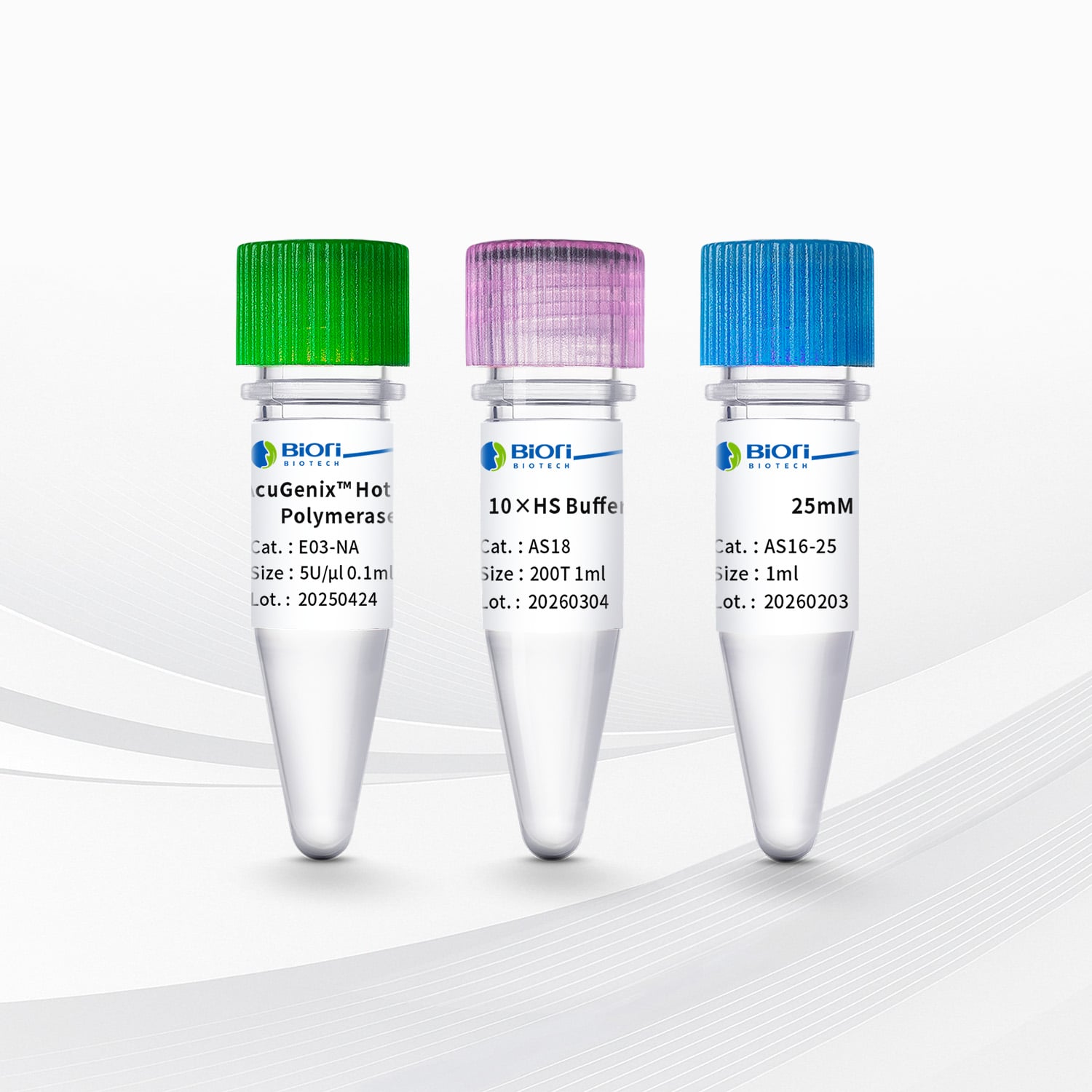
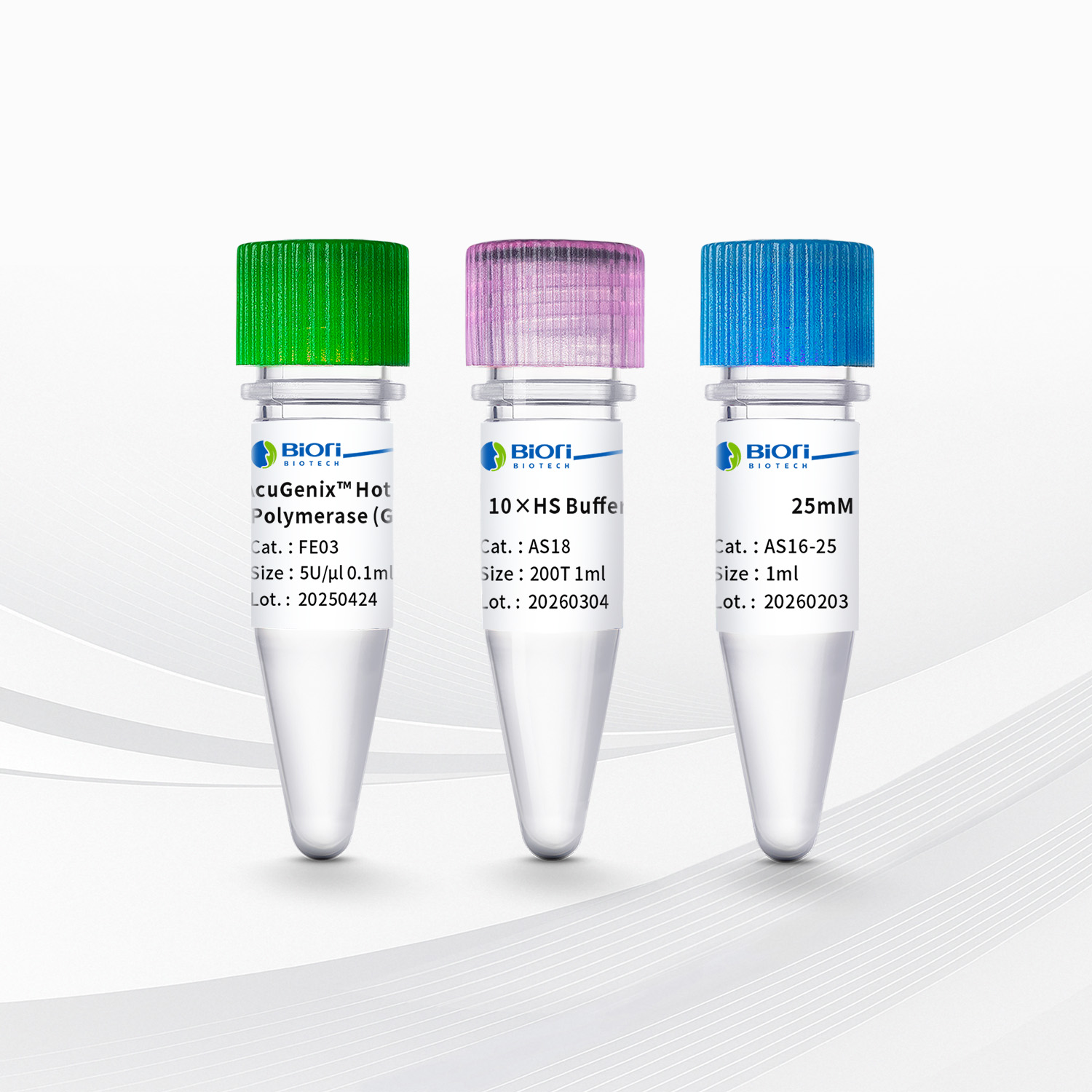
| Robustart Fast Taq DNA Polymerase-V2 | 5 U/μL |
| 10×PCR Buffer II (Mg2+ free) (optional) | Does not contain dNTPs or Mg2+. |
| MgCl2 (optional) | 25mM |
Performance data
1. Accelerated Stability Test
| -20°C control 37°C 7 d 37°C 14 d | |||
| Channel | VIC | ROX | CY5 |
|---|---|---|---|
| Amplification Curves | 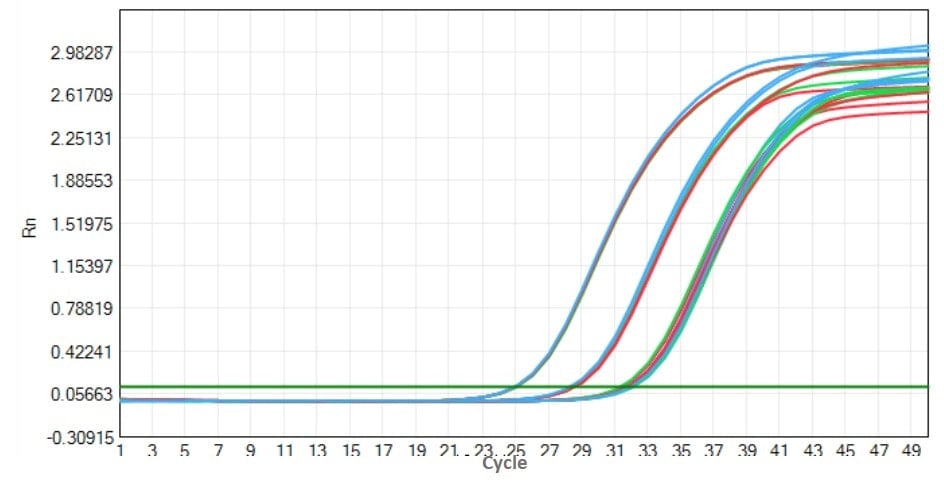 | 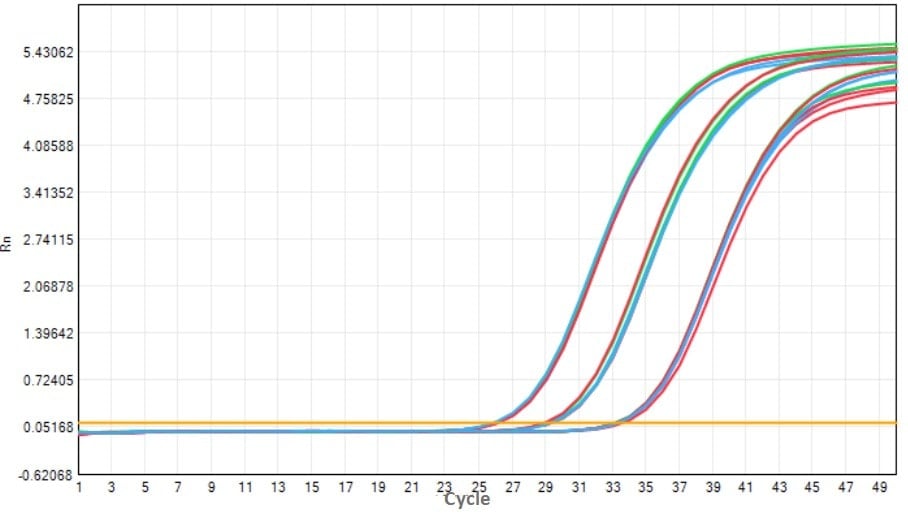 | 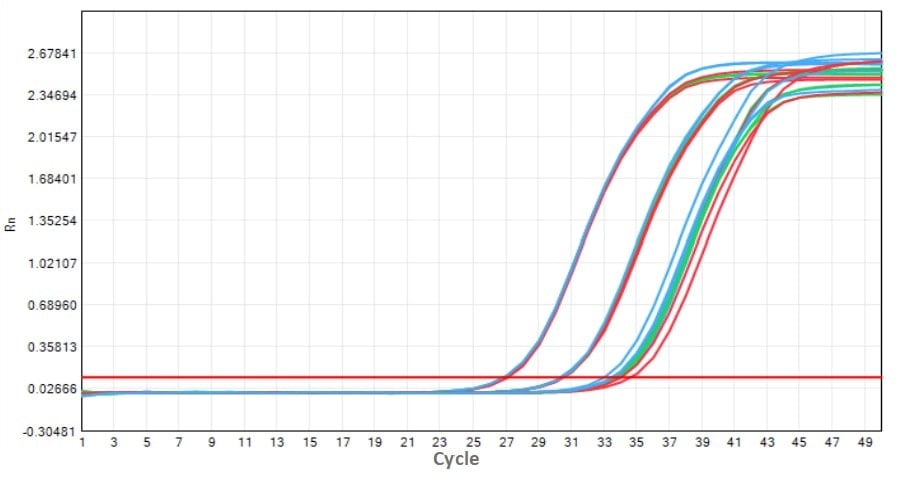 |
Conclusion 1: After the E20 enzyme was subjected to accelerated aging at 37°C for 7 and 14 days, its amplification performance was consistent with that of the unaccelerated reagent, indicating that it remained stable.
2. Freeze-Thaw Stability Test
| Freeze-Thaw: 0 cycles 5 cycles 10 cycles 15 cycles 20 cycles | |||
| Channel | VIC | ROX | CY5 |
|---|---|---|---|
| Amplification Curves | 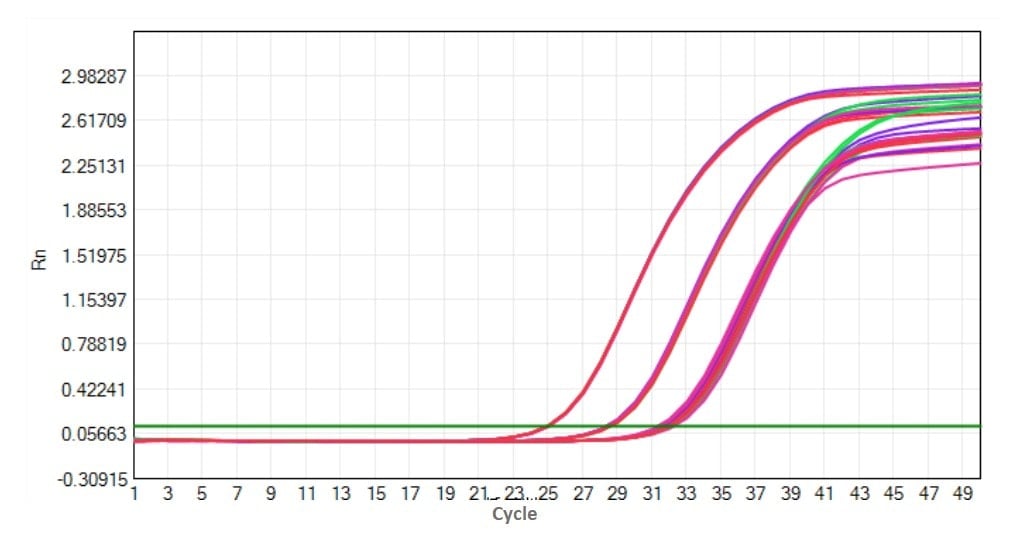 | 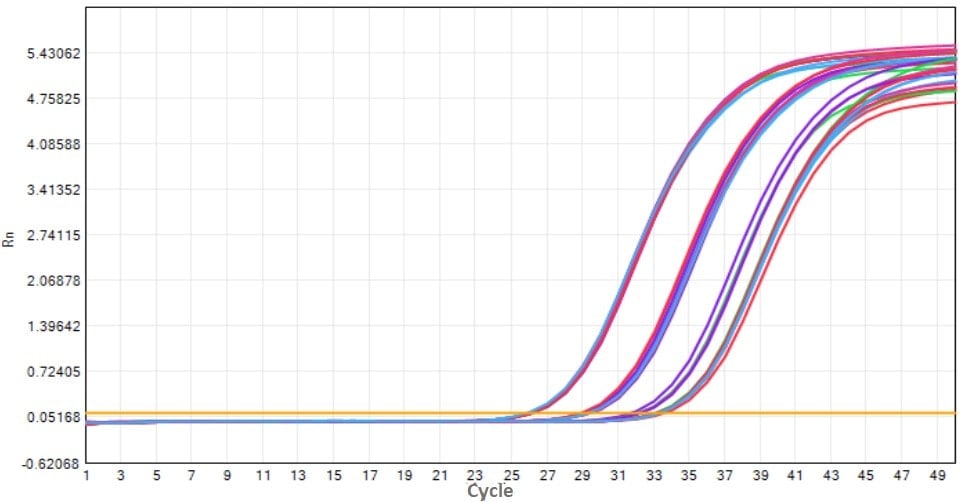 | 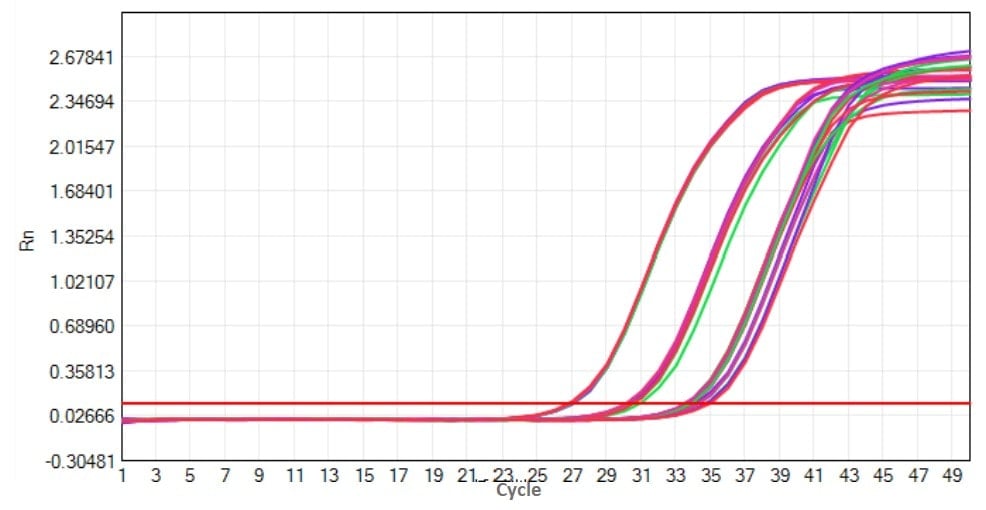 |
Conclusion 1: After 5, 10, 15, and 20 freeze-thaw cycles, E20 showed amplification performance consistent with that of the reagent without freeze-thaw treatment and remained stable.
3. Blocking/Hot-Start Performance
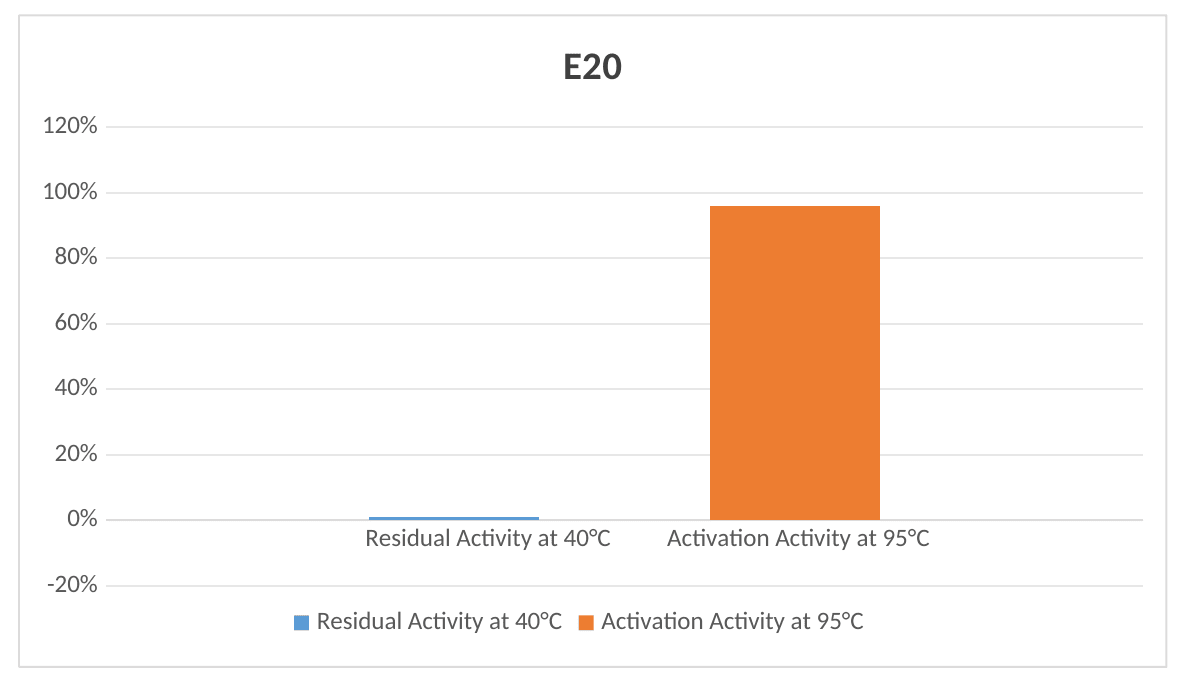
Conclusion 1: E20 effectively remained inactive at 40°C and was almost completely activated (96%) at 95°C.
Shipping and storage
| Condition | Recommendation |
|---|---|
| Shipping Conditions | -20±5°C |
| Storage Conditions | -20±5°C |
| Handling | Mix thoroughly before use and avoid repeated freeze–thaw cycles. |
Downloads
Need this product lyophilized, in bulk, or in a custom format?
The feasibility assessment is free of charge. Send the assay brief and target format.